Inicio » Blog » Qué hacer después de un accidente de peatón o de bicicleta en California, paso a paso
|
|
Última modificación el 23 de octubre de 2026
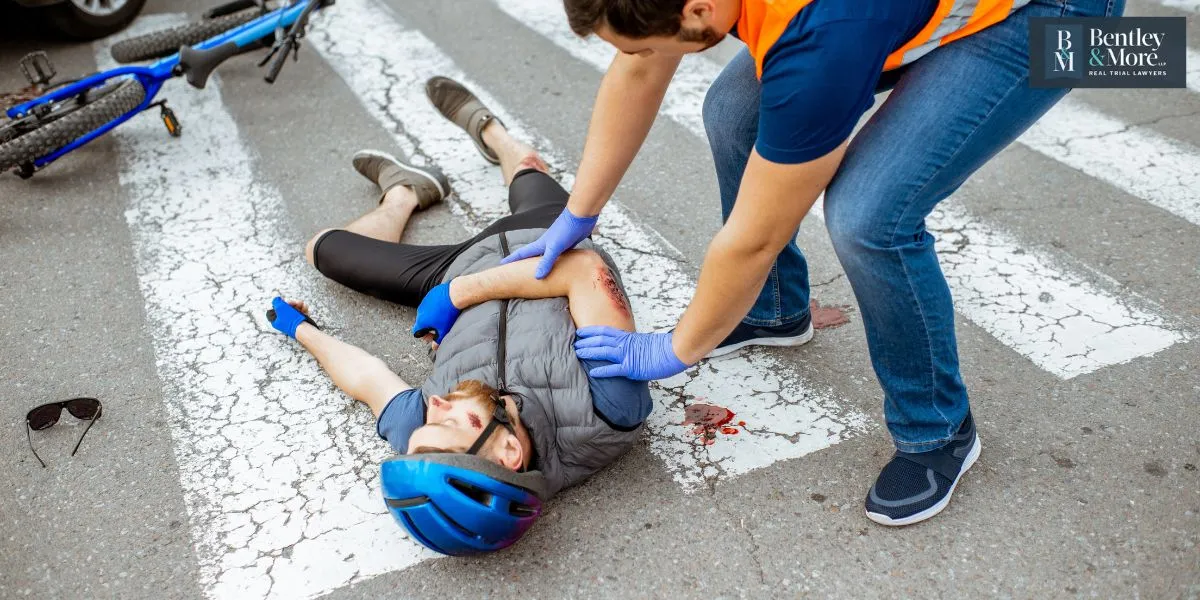
Getting hit by a car while walking or riding a bike turns an ordinary day into a blur of pain, confusion, and unanswered questions. You might be lying on the pavement wondering if you should call 911, or sitting in an ER two days later realizing your shoulder still won’t move right.
Knowing what to do next can protect your health and your legal rights. The steps below cover the scene, medical care, paperwork, and the deadlines that quietly control whether you can recover anything at all. The abogados especializados en lesiones personales en Bentley & More LLP handle these cases across California, and a consultation costs nothing.
Puntos clave
- Call 911 and get checked by a paramedic or doctor even if you feel okay at the scene.
- Collect the driver’s information, photos of the scene, and names of any witnesses before you leave.
- Get medical attention and follow your treatment plan.
- Protect physical evidence and check your own insurance coverage.
- Watch what you say to insurance adjusters and online.
What to Do in the First Minutes After the Crash
Get out of traffic if you’re able to, and call 911 right away so police and paramedics are on the way. Reporting the crash creates an official record that is hard for insurance companies to dispute.
While you wait, get the driver’s name, license plate, and insurance information, along with phone numbers for anyone who saw what happened. Photograph the vehicle, the road, your injuries, and anything like a stop sign or crosswalk marking that shows who had the right of way.
Why You Should See a Doctor Even If You Feel Fine
Adrenaline hides pain. Some pedestrian and bicycle injuries, like concussions, internal bleeding, and soft tissue damage, don’t show symptoms for hours or even days after impact. Getting evaluated the same day creates a medical record tying your injuries directly to the crash. Waiting to seek treatment gives insurance adjusters an opening to argue that something else caused your pain.
What to Do in the Days and Weeks After a Pedestrian or Bicycle Accident
What you do in the days and weeks after your accident can significantly affect your recovery. Take these steps:
- Follow your treatment plan and keep records. Attend every follow-up appointment, physical therapy session, and specialist referral. Gaps in treatment are one of the first things an adjuster points to when arguing your injuries weren’t serious. Keep a short journal of daily pain levels, sleep trouble, and activities you can’t do, and save every bill, receipt, and pay stub showing lost income.
- Protect the physical evidence. Don’t repair or discard your bike, helmet, phone, or the clothing and shoes you wore. Damage patterns can show the angle and force of impact. Keep photographing bruises and swelling as they change. If you were hit while riding a bicycle, consulting a abogado especializado en accidentes de bicicleta helps ensure physical evidence like damage patterns and impact angles are preserved for court.
- Be careful with insurance adjusters. You should report the crash to your own insurer, but you aren’t required to give the driver’s insurer a recorded statement. Anything you say can be used to assign you a share of fault. Hold off on accepting any early settlement offer, too. These often arrive before the full extent of your injuries is known, including whether you’ll need surgery.
- Stay quiet online. A vacation photo or a casual “I’m doing better” post can be taken out of context. Avoid posting about the crash or your activities until your case resolves.
- Check your own coverage. Review your auto policy for medical payments and uninsured motorist coverage, which can often apply to pedestrians and cyclists even when you weren’t in a car.
If you have any questions about what to do next, you can contact Bentley & More for a free, no-obligation consultation.
Preguntas frecuentes
What should I do if the driver left the scene without stopping?
Report it to the police immediately and give them everything you remember, such as a partial plate number, the car’s color, or a description of the driver. Hit-and-run crashes are common enough in California that officers know how to work the case, and your own uninsured motorist coverage may step in to cover your losses while the search continues.
Can I still recover damages if I was partly at fault for the crash?
Yes. California’s comparative negligence rule reduces your award by your percentage of fault but does not eliminate your right to recover, even if a jury finds you mostly responsible. The exact split usually comes down to evidence like witness statements, police reports, and sometimes dashcam footage.
How long do I have to file a pedestrian or bicycle accident claim in California?
Most claims against a private driver must be filed within two years of the crash under Código de Procedimiento Civil de California, § 335.1. If a government entity is involved, you generally have only six months to submit a written claim before that window closes.
Does not wearing a helmet hurt my bicycle accident case?
It can factor into the comparative negligence analysis, but it rarely destroys a valid claim outright. California does not require helmets for adult cyclists, so the question usually becomes whether the lack of a helmet made your injuries worse, not whether the driver was at fault for hitting you.
What if a dangerous road condition or a city vehicle caused my crash?
These cases generally require a formal government tort claim filed within six months, far sooner than the standard deadline. Investigating the road’s maintenance history and any prior complaints takes real legal work, so getting a pedestrian accident attorney involved early protects your ability to meet that short window.
Bentley & More LLP: A Pedestrian and Bicycle Accident Law Firm
Getting hit while walking or riding a bike leaves you dealing with pain, missed work, and a pile of questions about what happens next.
Building these cases well means more than filing paperwork.It means pulling traffic camera footage, requesting a city’s road maintenance records, and pushing back when an adjuster tries to shift blame onto you before the facts are even sorted out.
Our trial-ready team is here to answer your questions. If a accidente de peatones or bicycle accident has upended your life, you deserve someone in your corner who will dig into every detail. Póngase en contacto con nuestro bufete hoy mismo para una consulta gratuita.
Acerca del autor: Greg Bentley
Cofundador y abogado litigante en Bentley & More LLP
Greg Bentley es cofundador de Bentley & More LLP en Newport Beach, California. Con 36 años de experiencia, representa a demandantes en casos de lesiones personales, muerte por negligencia, responsabilidad por productos defectuosos, mala fe de las aseguradoras, condiciones peligrosas en carreteras y propiedades, y defectos en obras de construcción. Habilitado para ejercer en el Colegio de Abogados de California, Greg obtuvo su título de Doctor en Derecho en la Facultad de Derecho de la Western State University en 1990. Es miembro de varias organizaciones de abogados litigantes a las que solo se puede ingresar por invitación, entre ellas el Colegio Americano de Abogados Litigantes y la Academia Internacional de Abogados Litigantes, y participa activamente en múltiples asociaciones de abogados litigantes a nivel estatal y regional.







 EN