Inicio » Blog » Explicación de la responsabilidad por resbalones y caídas durante tormentas de lluvia según la norma California
|
|
Última modificación el 11 de agosto de 2026
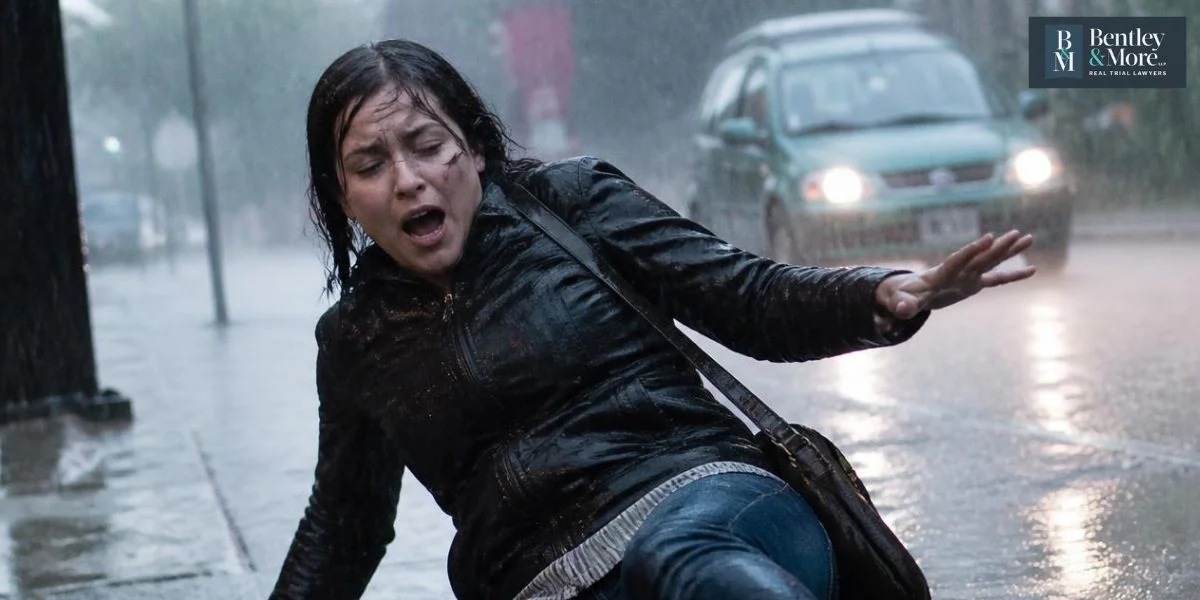
Te caíste de bruces en un charco del estacionamiento, o en un piso de baldosas mojadas cerca de la entrada de una tienda, y el gerente ya te dijo que fue “solo por la lluvia”. Esa excusa no se sostiene según la ley California.
Los propietarios de este lugar tienen la obligación ante los visitantes de mantener las aceras razonablemente seguras cuando llueve, no solo en días secos. La lluvia no elimina su deber de cuidado. Por lo general, lo refuerza, ya que un peligro previsible requiere una solución previsible.
Si has sufrido lesiones y te preguntas si se puede responsabilizar a alguien, Bentley & More LLP ha pasado años resolución de casos de responsabilidad civil por las instalaciones que los peritos de seguros prefieren llegar a un acuerdo de manera discreta antes que discutir ante un jurado.
Puntos clave
- La lluvia no exime al propietario de su obligación legal de actuar con la diligencia razonable.
- Las demandas contra una ciudad, un condado o Caltrans tienen un plazo de seis meses, no de dos años.
- Un jurado puede considerar al propietario como el principal responsable incluso si tú tuviste parte de la culpa.
- Las fotos y los informes de incidentes tomados el mismo día tienen más peso que lo que se recuerda más adelante.
La lluvia no exime al propietario de su deber de diligencia
Una tormenta no exime al propietario de su responsabilidad legal. La lluvia es un peligro que todo propietario puede prever, y es algo que debe tener en cuenta de manera razonable para evitar que alguien resulte lesionado.
Bajo Código Civil de California, artículo 1714, toda persona que sea dueña, arrendataria o administradora de un inmueble debe actuar con la diligencia razonable para garantizar la seguridad de las personas que se encuentran legalmente en él. Esa obligación no se suspende durante un aguacero. Los tribunales han considerado a las tiendas responsables por el agua traída por los clientes y los charcos en la entrada precisamente porque el riesgo era previsible.
Algunos propietarios se apoyan en la idea de que la primera lluvia fuerte de la temporada les da un pase libre. California no reconoce eso como una defensa general, tal como lo hacen algunos estados en el caso de la nieve y el hielo.
Peligros comunes que provocan caídas en días lluviosos en California
La mayoría de las caídas relacionadas con la lluvia se deben a unas pocas situaciones que los propietarios deben detectar durante una tormenta, como:
- Se acumula agua más allá de una entrada donde debería haber un tapete o un letrero de advertencia
- Rampas de acera desgastadas y desniveles en los estacionamientos que se llenan y quedan ocultos bajo unas pocas pulgadas de agua de escorrentía
- Canaletas obstruidas o bajantes rotos que vierten agua sobre una acera
Un abogado especializado en resbalones y caídas causados por tormentas de lluvia California sabe qué pruebas debe buscar y qué argumentos debe presentar si sufres lesiones en uno de estos tipos de accidentes.
Cómo demostrar tu reclamo por resbalón y caída relacionados con la lluvia
Ganar una demanda por responsabilidad civil de instalaciones relacionada con la lluvia depende de la notificación, ya que el propietario solo es responsable de una condición peligrosa de la que tenía conocimiento o que debería haber detectado mediante una inspección razonable. Un video que muestre agua estancada durante 20 minutos cuenta una historia diferente a la del agua que apareció 30 segundos antes de tu caída, y los ajustadores lo saben. Toma fotos del peligro lo antes posible, antes de que el personal de mantenimiento limpie las pruebas, y obtén el informe del incidente junto con los nombres de los testigos.
¿Qué pasa si te caes en una propiedad del gobierno?
Si te caes en la acera frente a un juzgado, o en el acotamiento de una carretera estatal durante una tormenta, te enfrentas a un diferentes plazos que una caída dentro de una tienda.
El plazo de seis meses para presentar reclamaciones
Las demandas contra una agencia municipal, del condado o estatal, incluida Caltrans, no tienen el plazo habitual de dos años. El Ley de Reclamaciones contra el Gobierno Requiere presentar una reclamación administrativa por escrito dentro de los seis meses siguientes a la caída; de lo contrario, el derecho a entablar una demanda suele extinguirse antes de que pueda iniciarse. Recuerda que el plazo comienza a correr el día en que te caíste y no el día en que decides llama a un abogado especializado en resbalones y caídas.
Diseño de sistemas de drenaje y carreteras
Las entidades públicas deben mantener los desagües pluviales y los acotamientos de las carreteras lo suficientemente despejados como para que la lluvia no los convierta en un peligro. Bentley & More LLP puede representar a las personas que resultaron lesionadas cuando las ciudades y Caltrans no actuaron con el cuidado razonable.
Cómo la culpa comparativa puede reducir el monto de tu reclamación
California se rige por una regla de culpa comparativa pura. El hecho de ser parcialmente responsable de tu propia caída no impide que presentes tu reclamo. Simplemente se ajusta el cálculo.
En Scott contra Alpha Beta Co. (1980) 104 Cal.App.3d 305: un jurado determinó que una tienda de abarrotes del sur 60% era responsable después de que el agua de lluvia que los clientes llevaron al interior durante una tormenta provocara una caída. Aunque el cliente también tuvo parte de la culpa, el tribunal de apelación confirmó la indemnización reducida, pero no anulada.
Preguntas frecuentes
¿Cuánto tiempo tengo para presentar una demanda por resbalón y caída después de una tormenta en California?
Por lo general, tienes dos años para demandar al propietario de un inmueble privado. El plazo para presentar una demanda se reduce a seis meses cuando se trata de una agencia municipal, del condado o estatal. Esperar incluso unas pocas semanas puede hacerte perder pruebas, como grabaciones de cámaras de seguridad, que pueden borrarse o sobrescribirse.
¿De verdad puede una tienda echarle la culpa a la lluvia en lugar de asumir su responsabilidad?
Pueden argumentarlo, pero la ley California no les da una exención automática solo porque el agua viniera de afuera. Los tribunales han considerado responsables a las tiendas cuando sabían que la lluvia estaba entrando y no limpiaron ni advirtieron con la suficiente rapidez.
¿Y si me cayera en un estacionamiento en lugar de dentro de un edificio?
Los estacionamientos se consideran parte de la propiedad, por lo que se aplica el mismo deber de cuidado en lo que respecta a los baches y los problemas de drenaje. El agua estancada oculta las irregularidades del pavimento, y es precisamente por eso que esas caídas suelen provocar lesiones.
¿Aún tengo un caso si había un letrero de “piso mojado”?
Un letrero ayuda a la defensa del propietario, pero no lo exime automáticamente de responsabilidad, especialmente si está mal ubicado o si el peligro se extendía más allá de él. La ubicación del letrero en comparación con el lugar donde te caíste es más importante de lo que mucha gente cree.
Bentley & More LLP: Tu bufete de abogados especializado en responsabilidad civil por instalaciones en el sur de California
Ni tú ni el dueño de la propiedad causaron la tormenta. Sin embargo, es posible que el dueño de la propiedad haya provocado la situación de peligro que causó tu caída. No deberías tener que asumir el costo de un canalón obstruido o un piso sin limpiar que sea responsabilidad de otra persona.
Bentley & More LLP ha dedicado años a averiguar de dónde provenía el agua y quién tuvo la oportunidad de detenerla. Si estás revisando facturas médicas y una historia que nadie en la propiedad quiere confirmar, Póngase en contacto con nuestra firma hoy mismo. Averigüemos qué pasó antes de que se cumpla ese plazo de seis meses, o ese plazo de dos años.
Acerca del autor: Greg Bentley
Cofundador y abogado litigante en Bentley & More LLP
Greg Bentley es cofundador de Bentley & More LLP en Newport Beach, California. Con 36 años de experiencia, representa a demandantes en casos de lesiones personales, muerte por negligencia, responsabilidad por productos defectuosos, mala fe de las aseguradoras, condiciones peligrosas en carreteras y propiedades, y defectos en obras de construcción. Habilitado para ejercer en el Colegio de Abogados de California, Greg obtuvo su título de Doctor en Derecho en la Facultad de Derecho de la Western State University en 1990. Es miembro de varias organizaciones de abogados litigantes a las que solo se puede ingresar por invitación, entre ellas el Colegio Americano de Abogados Litigantes y la Academia Internacional de Abogados Litigantes, y participa activamente en múltiples asociaciones de abogados litigantes a nivel estatal y regional.







 EN
EN