Home » Blog » California Vehicle Safety Inspection Requirements
|
|
Last Modified on May 05, 2026
As California drivers, we have a responsibility to keep our vehicles in good condition and repair any defects if necessary. To protect the safety of drivers on the road, California requires that all eligible vehicles in the state undergo a vehicle safety inspection to help keep the roads safe and decrease car accidents. While not all vehicles have to undergo an inspection, the majority of drivers are subject to this requirement. It is important to receive your vehicle safety inspection as mandated by the state. If you have any questions, reach out to a car accident attorney in Riverside to learn more!
Schedule a Free Consultation
Key Takeaways: California Vehicle Safety Inspection Requirements
- Most vehicles registered in California are required to pass a smog inspection every two years to complete their registration renewal.
- The inspection primarily checks for carbon emissions (smog) but also reviews a vehicle’s mechanical integrity and fluid levels.
- Certain vehicles are exempt from this requirement, including electric vehicles, motorcycles, and gasoline-powered cars that are six model years old or newer.
- Failing a vehicle safety inspection means the owner must complete the necessary repairs before they can legally register the car.
- Failure to maintain a vehicle in safe working order can be a significant factor in establishing liability if that vehicle causes a car accident.
Vehicle Safety Inspection Requirements in California
Most drivers in California are required to undergo a vehicle inspection every two years. If you do not receive your emissions test, you could face certain penalties, such as fines and registration denial. You will bring your vehicle to a licensed inspection station near you and pay a small fee between $30 to $70, depending on the size of your vehicle.
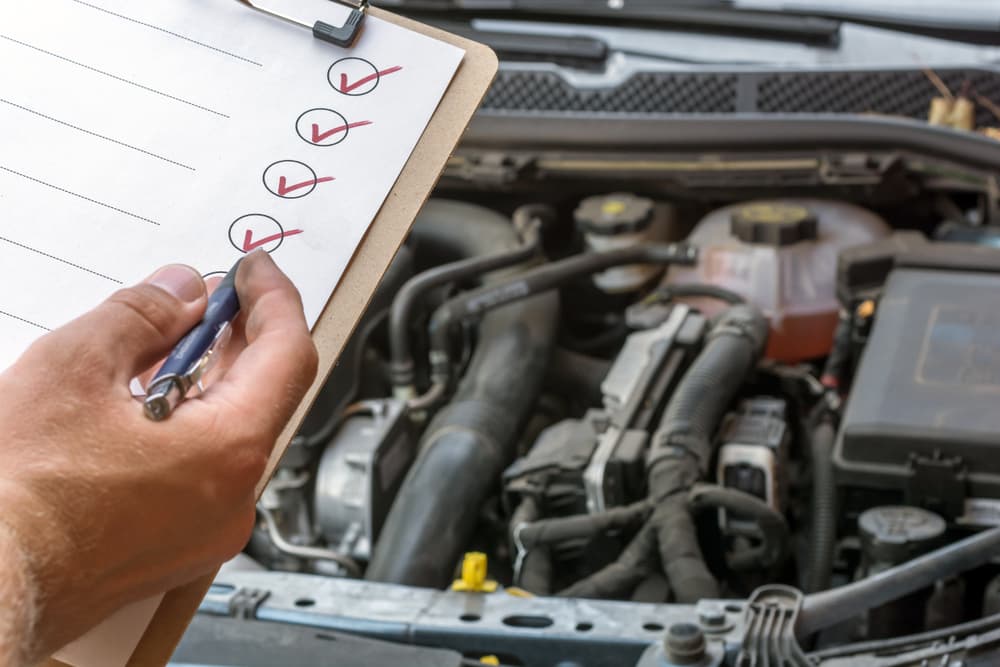
California’s annual safety inspections will check for any damage or limitations to the following mechanical functions and features of the car.
- Fluid levels
- Any potential leaks
- Mechanical integrity
- Carbon emissions
The carbon emissions, or smog, portion of the California vehicle inspection is especially crucial. Smog can create dangerous air quality levels in California cities and is a serious concern in major metropolitan areas, including Riverside and Orange County. Your vehicle will have to meet smog emissions requirements set forth by the Environmental Protection Agency and California state law.
After you receive your smog emissions inspection, the inspection station will provide you with a smog certification that reports your vehicle’s results. The station should send an electronic report of your report to the Department of Motor Vehicles, and the certification will be valid for 90 days. You will have to complete your registration renewal within this 90-day timeframe.
Exemptions to the California Vehicle Safety Inspection
 While many vehicles in California will have to receive an inspection each year, you may not have to undergo an inspection if you own a certain vehicle. If you have a vehicle from a model year in the range between 1976 to the present, you most likely have to receive an inspection. Exemptions to California’s vehicle safety inspection requirements are as follows.
- If you have a vehicle that is six model years old or newer, you will not need an emissions test. However, you will need to pay a $20 smog abatement fee each year.
- Electric vehicles and motorcycles do not have to undergo an emissions test.
- Diesel-powered vehicles older than the model year 1997 and natural gas-powered vehicles with a gross vehicle weight rating of over 14,000 pounds do not need an emissions test.
- If you are transferring the registration of a car that is less than four years old, you will not need to get an emissions test unless the vehicle runs on diesel.
Schedule a Free Consultation
What Happens If You Fail a Vehicle Inspection?
If your vehicle fails a mechanical or emissions portion of the safety inspection, the state will require you to seek repairs as soon as possible. Different inspection stations throughout the state offer these services, and the inspectors could repair your vehicle at that station.
You will have to pay for these repairs out of pocket, which can be a financial burden on some people. If you cannot afford to pay for the repairs to your vehicle, the state of California will provide financial assistance up to $500 if you meet the eligibility requirements.
If you do not receive a vehicle inspection, you could face penalties from the Department of Motor Vehicles, such as fines, and failure to maintain a safe vehicle could put you at risk for liability in a car accident. It is important to receive these inspections whenever the Department of Motor Vehicles requires you to in order to uphold your duty of care.
Maintaining vehicle safety is extremely important to keep California’s roads safe in general. You do not want another driver’s brakes to go out or for an engine to explode while you are driving.
FAQs: California Vehicle Safety Inspection Requirements
Here are answers to some common questions regarding California’s vehicle inspection laws.
What should I bring with me to a smog check station?
You should bring your vehicle, a form of payment for the test fee, and your vehicle registration renewal notice from the DMV. If you do not have the renewal notice, the station can typically find your vehicle’s information in the state database using its Vehicle Identification Number (VIN).
How can poor vehicle maintenance impact a car accident claim?
If a driver fails to keep their car in a reasonably safe condition—for example, by driving with worn-out brakes or bald tires—and this failure causes an accident, they can be found negligent. This means they failed to meet their basic duty of care to other drivers. Proving this negligence can be critical for an injured person to successfully recover compensation for their losses.
What is the difference between a standard smog station and a STAR station?
The DMV directs some vehicle owners to a STAR-certified station for their smog check. These stations meet higher performance standards established by the Bureau of Automotive Repair. Your registration renewal notice will state whether you are required to visit a STAR station for your inspection.
What happens if I recently moved to California with my car?
When you move to California and want to register your out-of-state vehicle, you will be required to get a smog check. This is necessary to establish the vehicle’s compliance with California’s emissions standards before it can be registered here.
Can a car fail inspection for issues other than emissions?
While the primary focus is the smog check, an inspection station can also identify clear and obvious safety hazards. If a vehicle has a serious mechanical defect that makes it unsafe to drive, such as a major fluid leak or faulty brakes, it will not pass the safety portion of the state’s requirements, and repairs will be needed.
Discuss Your Case with a Southern California Car Accident Attorney
A car accident caused by a poorly maintained vehicle can lead to devastating and life-altering injuries. These cases are often complex, requiring a thorough investigation to prove that a driver’s failure to make necessary repairs led directly to the harm you suffered.
At Bentley & More LLP, our trial attorneys have the resources and experience to handle challenging personal injury and wrongful death claims throughout Southern California. We are committed to telling your story and holding the responsible parties accountable.
If you or a loved one has been seriously injured, or if you are an attorney with a complex case that needs a dedicated litigation team, we are here to help. Contact Bentley & More LLP today at (949) 870-3800 or through our online form for a free consultation with a Riverside personal injury lawyer to understand your legal options.
Schedule a Free Consultation
About the author: Greg Bentley
Co-Founder & Trial Lawyer at Bentley & More LLP
Greg Bentley is Co-Founder of Bentley & More LLP in Newport Beach, California. With 36 years of experience, he represents plaintiffs in personal injury, wrongful death, product liability, insurance bad faith, dangerous road and property conditions, and construction-site failure cases. Admitted to the State Bar of California, Greg earned his J.D. from Western State University College of Law in 1990. He is a member of several invitation-only trial organizations, including the American College of Trial Lawyers and the International Academy of Trial Lawyers, and is active in multiple statewide and regional trial lawyer associations.







 ES
ES