


Injuries From Falling and Landing on Your Hands
Injuries From Falling and Landing on Your Hands
It’s a natural human reflex: when you fall, you put your hands out to break the impact. While this instinct can protect your head and vital organs, it often results in severe injuries from falling and landing on your hands. The force of your body weight concentrating on your wrists, hands, and arms can cause complex fractures, dislocations, and soft tissue damage that may require surgery and lead to long-term complications.
If your fall was caused by someone else’s carelessness, a skilled personal injury lawyer can help you understand your rights and pursue the compensation you deserve for your medical bills, lost income, and other damages.
Key Takeaways about Injuries from Falling and Landing on Your Hands
- A “Fall On an Outstretched Hand,” or FOOSH injury, is a common mechanism for severe wrist, arm, and shoulder damage.
- These falls can cause a range of injuries, from simple sprains to complex fractures like a Colles’ fracture or a scaphoid fracture, which often require surgical intervention.
- Long-term consequences can include chronic pain, arthritis, reduced mobility, and a diminished ability to work or enjoy daily activities.
- A legal claim may be possible if the fall was caused by a property owner’s negligence, such as failing to clean a spill or repair a known hazard.
- Determining liability involves proving that the property owner had a duty of care and breached that duty, directly causing the fall and subsequent injuries.
- Compensation in a personal injury case can cover medical expenses, lost wages, and non-economic damages like pain and suffering.
What is a FOOSH Injury?
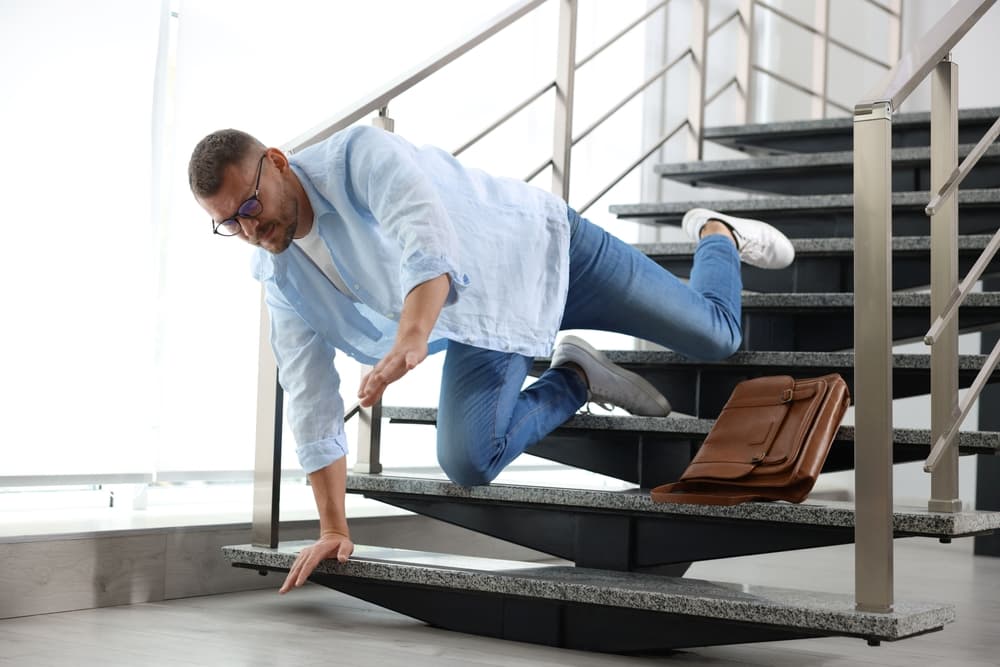
In the medical community, the event of falling onto an outstretched hand is so common that it has its own acronym: FOOSH. This describes the mechanism of injury rather than a specific diagnosis. When you stumble or slip, your brain instinctively signals your arms to extend and absorb the shock. Your hands, wrists, and arms take the full force of the impact, which they are not designed to withstand.
The result can be a devastating chain reaction of force traveling from your hand up through your arm to your shoulder and collarbone. The specific injuries you sustain often depend on the angle of the fall, the surface you land on, and your own physical condition, such as your age and bone density. These factors all play a part in the severity and complexity of the injury.
Common Types of Injuries from Falling and Landing on Your Hands
The intricate structure of the hand and wrist, with their many small bones, ligaments, and tendons, makes them particularly vulnerable in a fall. While some people might walk away with only scrapes and bruises, many others face debilitating injuries that have a profound effect on their lives.
Wrist Fractures
The wrist is the most common site of injury in a FOOSH incident. The radius, the larger of the two forearm bones, often breaks near the wrist.
- Colles’ Fracture: This is a break in the radius close to the wrist, where the broken piece of bone points upward. It’s one of the most frequent types of fractures seen in adults.
- Smith’s Fracture: This is the opposite of a Colles’ fracture, often happening when you fall on the back of your wrist. The broken fragment points downward.
- Scaphoid Fracture: The scaphoid is a small, boat-shaped bone in the wrist that is crucial for motion and stability. It has a poor blood supply, which means a fracture here can be difficult to heal and may lead to serious complications like avascular necrosis (bone death) if not treated properly. According to the American Academy of Orthopaedic Surgeons, scaphoid fractures are common but can sometimes be missed on initial X-rays.
These fractures often require casting, and in many cases, surgery is necessary to implant plates, screws, or pins to stabilize the bone and ensure it heals in the correct position.
Elbow and Shoulder Injuries
The force from a fall doesn’t always stop at the wrist. It can travel up the arm, causing significant damage to the elbow and shoulder joints.
- Radial Head Fracture: The radial head is part of the radius bone in your elbow joint. A fracture here can limit your ability to rotate your forearm, affecting simple tasks like turning a doorknob.
- Elbow Dislocation: The intense force can push the bones of the elbow out of place, often tearing the surrounding ligaments.
- Shoulder Dislocation or Fracture: The impact can dislocate the shoulder joint or fracture the clavicle (collarbone) or the top of the humerus (the upper arm bone).
Recovering from these types of arm injuries often involves a long and challenging period of physical therapy to regain strength and range of motion.
Soft Tissue Damage
Not all injuries involve broken bones. The ligaments (which connect bone to bone) and tendons (which connect muscle to bone) can be stretched or torn completely. A severe sprain can sometimes be more difficult to recover from than a simple fracture. These injuries can lead to chronic instability and pain if not addressed correctly.
Why These Hand and Wrist Injuries Can Be So Serious
An injury to your hand or wrist is more than a temporary inconvenience; it can fundamentally alter your ability to interact with the world. For many people, their hands are essential for their livelihood—from construction workers and mechanics in San Bernardino to office workers typing at desks in Irvine.
The potential long-term consequences are significant:
- Chronic Pain and Stiffness: Even after healing, many people experience persistent pain, aching, and stiffness in the injured joint.
- Post-Traumatic Arthritis: A fracture that involves a joint surface significantly increases the risk of developing arthritis later in life, leading to pain and decreased function.
- Loss of Function: You might lose grip strength, fine motor skills, or range of motion, making everyday tasks like buttoning a shirt, cooking, or writing difficult.
- Nerve Damage: The impact or subsequent swelling can compress or damage nerves in the wrist, such as the median nerve, leading to carpal tunnel syndrome.
When an injury affects your ability to work or enjoy your hobbies, the impact goes beyond the physical pain. It can affect your financial stability and your overall quality of life.
When Can a Fall Lead to a Legal Claim in Southern California?
A fall is not always just an accident. In many situations, it is the direct result of a property owner’s negligence. In California, property owners and managers have a legal responsibility, known as a “duty of care,” to keep their premises in a reasonably safe condition for visitors. When they fail to do so, and someone is injured as a result, they can be held responsible. This area of law is called premises liability.
This legal responsibility applies to all kinds of properties, including:
- Grocery stores in Anaheim or Santa Ana
- Shopping centers and parking lots in Newport Beach
- Apartment complexes and office buildings
- Construction sites in Riverside
- Government-owned properties like parks and sidewalks
A successful premises liability claim requires showing that the property owner was negligent. This means proving one of the following:
- The owner or an employee created the dangerous condition (e.g., mopped a floor and failed to put up a “wet floor” sign).
- The owner or an employee knew about the danger but did nothing to correct it (e.g., knew a staircase handrail was broken and didn’t fix it).
- The owner or an employee should have known about the danger through reasonable care and inspection (e.g., a large puddle from a leaky freezer that had been there for hours).
Proving negligence is the key to holding a property owner accountable for the harm they caused.
Understanding Your Rights After a Serious Fall

If you were injured in a fall caused by another party’s carelessness, you have the right to seek compensation for your losses. These losses, legally referred to as “damages,” are meant to help restore you to the position you were in before the injury occurred.
Compensation can cover a wide range of harms, including:
- Medical Expenses: This includes everything from the initial emergency room visit and surgery to ongoing physical therapy, medication, and any future medical care you may need.
- Lost Wages: If your injury prevents you from working, you can seek compensation for the income you’ve lost.
- Loss of Earning Capacity: For catastrophic injuries that permanently affect your ability to do your job, you can pursue damages for the reduction in your future income.
- Pain and Suffering: This compensates you for the physical pain, emotional distress, and overall reduction in your quality of life resulting from the injury.
It is important to act promptly. In California, there is a time limit for filing a personal injury lawsuit, known as the statute of limitations. Generally, you have two years from the date of the injury to file a claim. If you miss this deadline, you may lose your right to seek compensation forever.
The Role of a Personal Injury Attorney in Complex Fall Cases
Dealing with the consequences of a serious injury is difficult enough without the added stress of a legal battle. Insurance companies often try to minimize payouts or blame the injured person for the fall. An experienced personal injury attorney advocates for you and manages every aspect of your claim.
An attorney’s role includes:
- Investigating the Incident: Gathering evidence, such as photos of the scene, incident reports, witness statements, and video surveillance footage.
- Proving Negligence: Using the evidence to build a strong case that demonstrates the property owner was at fault.
- Calculating Your Damages: Working with medical and financial professionals to accurately assess the full extent of your past, present, and future losses.
- Handling All Communications: Managing all negotiations with insurance companies so you can focus on your recovery.
- Litigating Your Case: If a fair settlement cannot be reached, a dedicated trial attorney is prepared to take your case to court to fight for the compensation you deserve.
Cases involving catastrophic injuries from falls are complex and require significant resources to pursue. A law firm with a history of handling these difficult cases is best positioned to advocate for your rights effectively.
FAQs: Injuries From Falling and Landing on Your Hands
Here are answers to some common questions people have after sustaining a serious hand or wrist injury in a fall.
What if my fall happened at my workplace?
If you were injured while on the job, your primary path for recovery is typically through a workers’ compensation claim. This system provides benefits for medical treatment and lost wages, regardless of who was at fault. However, if a third party (someone other than your employer, like a subcontractor or equipment manufacturer) was responsible for the dangerous condition, you may also have a separate personal injury claim against that party.
How is fault determined in a slip and fall case?
Fault is determined by analyzing whether the property owner acted reasonably to keep the property safe. Courts will look at evidence such as inspection logs, maintenance records, witness testimony, and expert opinions to decide if the owner knew or should have known about the hazard. The injured person’s actions are also considered, but being partially at fault doesn’t necessarily prevent you from recovering compensation in California.
What should I do if the property owner tries to blame me for the fall?
It is very common for property owners and their insurance companies to try to shift blame. They might claim you weren’t paying attention or were wearing inappropriate footwear. Do not argue with them or accept blame. Stick to the facts of what happened. An attorney can help counter these arguments by presenting evidence that the dangerous condition was the primary cause of your fall.
Do I still have a case if I had a pre-existing condition in my wrist?
Yes, you can still have a valid claim. The “eggshell plaintiff” rule in personal injury law means a defendant is responsible for the full extent of the injuries they cause, even if the victim was more susceptible to injury due to a pre-existing condition. You can seek compensation for any aggravation or worsening of your prior condition that was caused by the fall.
What kind of evidence is most important for my case?
The most critical evidence is often gathered immediately after the fall. This includes photographs of the specific hazard that caused you to fall (like a puddle of water or a broken step), the names and contact information of any witnesses, and an official incident report if one was created. Seeking prompt medical attention also creates a crucial record connecting the fall to your injuries.
Let Us Help Tell Your Story
Recovering from a serious hand, wrist, or arm injury can be a long and demanding process. At Bentley & More LLP, we understand the physical, emotional, and financial challenges you are facing. Our attorneys are dedicated to working closely with clients across Southern California to understand their individual situations and tell their unique stories.
Our success is measured by the real difference we make in our clients’ lives. We provide aggressive and compassionate legal representation to people in Orange County, Riverside, San Bernardino, and beyond. We also frequently partner with other lawyers who refer their most complex and resource-intensive cases to our firm, confident in our ability to achieve justice for the client.
If your life has been changed by a serious fall caused by someone else’s negligence, contact Bentley & More LLP at (949) 870-3800 or through our online form for a free, confidential consultation. Let us help you hold the responsible parties accountable and fight for the resources you need to move forward.