


Do I Have to Report an Accident to the DMV in California?
Do I Have to Report an Accident to the DMV in California?
Yes, in many cases, you are required by law to report a car accident to the California Department of Motor Vehicles (DMV). This requirement is completely separate from calling 911 or having the police file a report at the scene. If the collision involved an injury, a fatality, or property damage that appears to be more than $1,000, you have a legal duty to file a special report. Knowing when and how to do this is key to protecting your rights and your driving privilege after a crash.
Protect your license and your claim—connect with a skilled car accident lawyer now for immediate guidance.
Key Takeaways about When to Report an Accident to the DMV in California
- A driver involved in a vehicle accident in California must report it to the DMV if it resulted in any injuries, death, or property damage exceeding $1,000.
- This report must be made using the official SR-1 form within 10 days of the incident.
- The duty to report applies to all drivers involved, regardless of who was at fault for the accident.
- Failing to submit the required SR-1 form on time can lead to the suspension of a person’s driver’s license.
- The DMV report is a separate legal obligation from any report filed by the California Highway Patrol or local police.
Understanding California’s DMV Accident Reporting Law
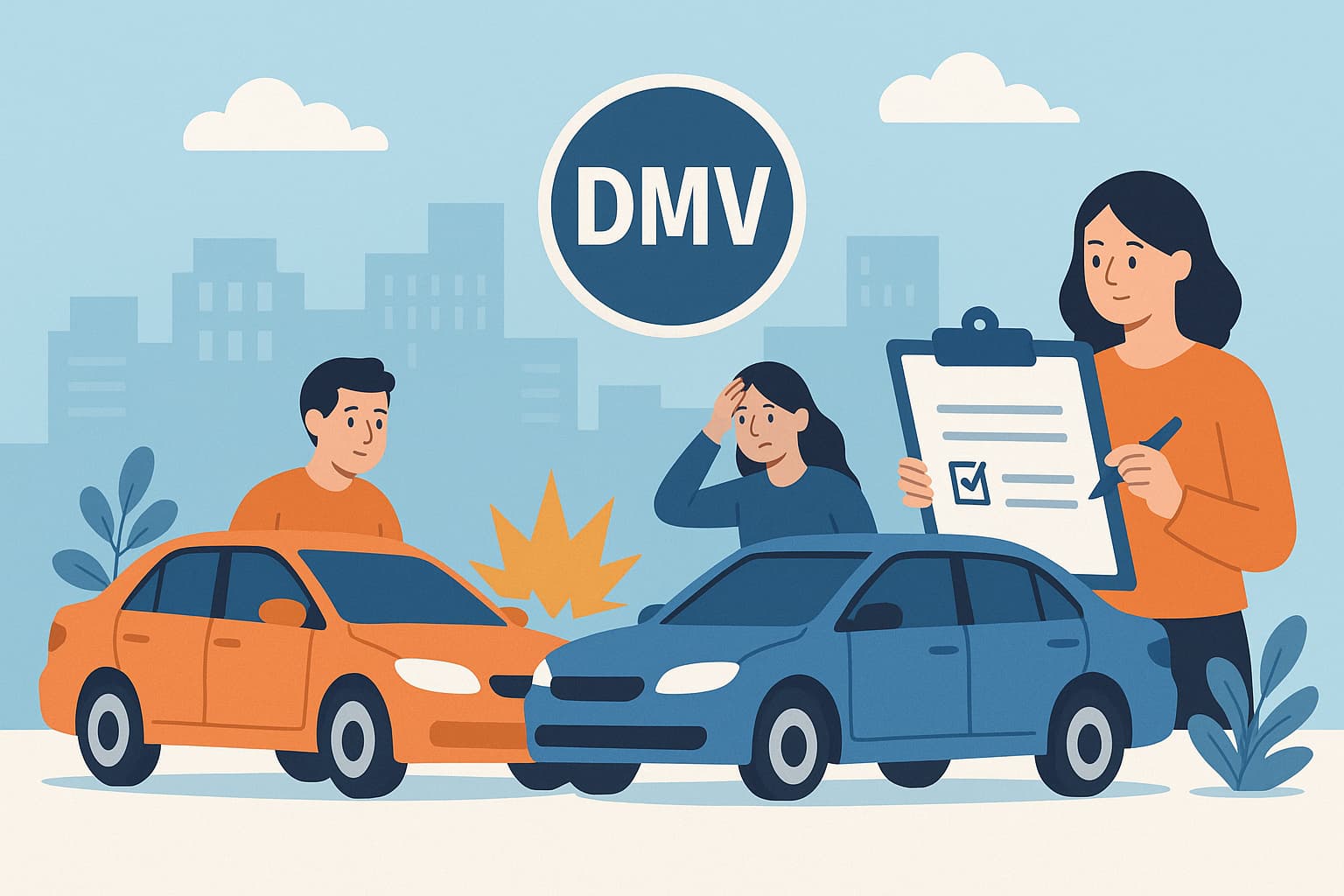
The primary reason for this reporting requirement is to ensure financial responsibility. The state wants to confirm that drivers involved in significant accidents have auto insurance or other resources to cover the damages they cause.
This law, often called the Financial Responsibility Law, mandates that a driver of any motor vehicle involved in a collision must file a report with the DMV. This applies if the crash occurred on a street, highway, or even private property open to the public, like the parking structure at South Coast Plaza.
The thresholds that trigger this requirement are important to remember:
- Any Injury: If any person involved in the crash—a driver, passenger, pedestrian, or cyclist—suffers any degree of injury, a report is mandatory. Even if an injury seems minor at the scene, it must be reported.
- Any Fatality: If the accident tragically results in a person’s death, a report is required.
- Property Damage Over $1,000: If the total damage to all vehicles and property involved is more than $1,000, a report must be filed. In today’s world, this is a very low threshold. A minor fender bender involving a newer car with sensors, cameras, and specialized paint can easily exceed this amount.
It is crucial to understand that this is your personal responsibility as a driver. The police officer who responded to the scene will not file this form for you.
The SR-1 Form: What It Is and How to File It
The official document you must use to report an accident to the DMV in California is called the “Report of Traffic Accident Occurring in California,” or the SR-1 form. It is a one-page document that asks for the basic facts of the collision. The state uses the information on this form to verify that you had valid liability insurance or another form of financial responsibility at the time of the crash.
You can fill out or download the SR-1 form directly from the California DMV website. It is a tool for compliance, not for assigning blame. The form itself even states that it is not used to determine fault in the accident.
What Information Do I Need for the SR-1 Form?
To complete the form accurately, you will need to gather several key pieces of information. It is helpful to collect as much of this as possible at the scene of the accident, but you can also find details on the information exchange card or the police report, if one was made.
You should be prepared to provide:
- Your full name, address, and driver’s license number.
- The date, time, and specific location of the collision.
- Your vehicle’s license plate number, year, make, and model.
- The name, address, and driver’s license number of the other driver(s).
- The license plate numbers and vehicle information for all other cars involved.
- The name and policy number of your automobile insurance company.
- A brief and factual description of the injuries and property damage.
Having these details organized will make the process of filling out the form much more straightforward.
Keep in mind that the deadline is strict: you must complete the form within 10 days of the accident. Missing this deadline is the most common reason people face penalties. Mark your calendar and treat this as a top priority after handling your immediate medical needs.
Common Questions About When to Report an Accident to the DMV in California
Even with the rules laid out, people often have specific questions about their situation. A crash on the busy I-5 through Orange County can be chaotic, and it’s easy to be unsure of the next steps.
What If the Police Already Filed a Report?
This is a point of frequent confusion. Many people believe that if the California Highway Patrol or an officer from the Irvine or Anaheim Police Department responded and wrote a report, their reporting duties are done. This is incorrect. A police accident report and the DMV’s SR-1 form are two entirely different things serving different purposes.
- Police Report: This is created by law enforcement for their records. It often includes the officer’s initial observations, witness statements, and sometimes a preliminary opinion on how the crash occurred.
- SR-1 Form: This is your direct report to the DMV for the sole purpose of demonstrating your financial responsibility (i.e., that you had insurance).
The police will not file the SR-1 for you. You must complete and mail it yourself.
What if the Damage Seems Minor?
If you were in a seemingly minor collision, you might be tempted to handle it with a handshake agreement and avoid reporting. This can be a risky choice. What appears to be a small scratch on a bumper can hide thousands of dollars in damage to underlying sensors, cameras, and structural components.
If you are uncertain whether the total damage exceeds the $1,000 threshold, the safest course of action is to file the SR-1 form. This fulfills your legal duty and protects you from potential penalties if the other driver later claims extensive damage or injuries.
What Happens If I Don’t File the SR-1 Form?
The consequences for failing to report a qualifying accident are significant. If the DMV does not receive an SR-1 form from you within 10 days, and they learn of the accident through another driver’s report or a police report, they can take action against you. The most common penalty is the suspension of your driver’s license.
This suspension can happen even if the accident was not your fault. The law requires every driver involved to report. If your license is suspended, you will have to go through a reinstatement process, which typically involves providing proof of insurance (an SR-22 certificate) and paying fees.
How the DMV Report Can Affect Your Personal Injury Claim

While the SR-1 form is a procedural requirement, it can also play a role in a future personal injury claim. The information you provide on the form creates an official record related to the accident. Insurance companies and attorneys for the other side may review this document as part of their investigation.
The Importance of Accuracy in Your Report
When you fill out the SR-1, your descriptions should be truthful and based only on the facts you know for certain. Do not guess, speculate, or admit fault on the form. Stick to objective details.
- Describe Damage Factually: Instead of writing “the car was totaled,” describe the location of the damage, such as “major front-end damage” or “rear bumper and trunk damage.”
- Describe Injuries Carefully: If you were hurt, you can state that you sustained injuries. Be cautious about downplaying them. It is common for the full extent of injuries from a car accident, like a traumatic brain injury (TBI) or spinal damage, to become apparent days or weeks later.
Any inconsistencies between what you write on the SR-1, what you tell your insurance company, and your statements in a deposition can be used to challenge your credibility later.
The SR-1 as Evidence of the Incident
The SR-1 form serves as an official document that you complied with your legal duties. It helps create a paper trail that confirms the date of the accident and your initial report of damages and injuries. This can be an important piece of the puzzle when building a comprehensive personal injury case, especially if the other party disputes when or how the crash happened.
The simple act of filing the form demonstrates responsibility and can prevent complications with your license that might distract from your physical and financial recovery.
When Legal Guidance Becomes Necessary
Filing a DMV report is just one piece of the puzzle. If you have been seriously injured, the path to recovery can be complicated. The other driver’s insurance company may dispute liability, question the severity of your injuries, or make a settlement offer that does not come close to covering your losses.
Consider seeking legal guidance in the following situations:
- The accident caused catastrophic or life-altering injuries, such as a brain injury, burns, or spinal cord damage.
- The other driver is denying fault, or there is a dispute about how the accident happened.
- The at-fault driver was uninsured or did not have enough insurance to cover your medical bills and other losses.
- An insurance company is acting in bad faith, for example, by unreasonably delaying or denying your valid claim.
- Your case involves complex elements, such as a commercial truck, a rideshare vehicle, or a government entity.
An experienced trial attorney can manage the legal process, handle communications with insurance companies, and build a case designed to secure the compensation you need for medical treatment, lost income, and the impact on your quality of life. Even other legal professionals recognize the complexities of these cases and frequently connect their clients with firms that have the resources for challenging litigation.
FAQs: Do I Have to Report an Accident to the DMV in California?
Here are answers to some other common questions people have about California’s accident reporting requirements.
If I was a passenger in a car accident, do I need to file an SR-1?
No, the legal requirement to file an SR-1 form applies only to the drivers of the vehicles involved in the collision. As a passenger, you do not have a reporting duty to the DMV, though you may have a personal injury claim.
What if the accident happened on private property, like a shopping mall parking lot in San Bernardino?
The SR-1 reporting requirement applies to any accident that meets the thresholds for injury or property damage, regardless of whether it happened on a public road or on private property that is open to the public, such as a parking lot or a private road.
Can I change my SR-1 report after I submit it?
Generally, the SR-1 form cannot be amended once it has been submitted. It is considered a snapshot of the information you had within the 10-day reporting window. This is why it is so important to be accurate and factual. If you discover new injuries or damages later, that information becomes part of your ongoing insurance claim and medical records, not an update to the initial DMV form.
What if I don’t have the other driver’s insurance information?
You should still complete and file the SR-1 form with all the information you were able to gather. Include the other driver’s name, license plate number, and any other details you have. You can make a note on the form that the driver failed to provide insurance information at the scene. Filing an incomplete report is better than filing no report at all.
Contact Bentley & More LLP for a Free Consultation
If you or a loved one has suffered a serious injury in a car accident in Southern California, fulfilling your legal reporting duties is just the first step. Securing fair compensation for your medical care, lost wages, and other damages often requires dedicated legal advocacy. At Bentley & More LLP, our attorneys focus on telling the stories of those who have been wrongfully injured.
We provide dedicated legal representation to clients in Newport Beach, Orange County, Riverside, San Bernardino, and across the region. Our firm has the resources and trial-ready approach to handle complex and difficult cases involving catastrophic injuries. Let us help you understand your options. Contact us today at (949) 870-3800 or through our online form for a free, no-obligation consultation with a personal injury lawyer to discuss your case.