Most workers in California must lift things as part of their jobs. Warehouse workers, construction workers, and agricultural workers routinely lift heavy objects throughout their workdays, but even office workers may have to pick up heavy boxes of copy paper or other weighty items. The same holds true for retail and restaurant workers who must pick up heavy crates or boxes.
Whatever your profession, if you suffered a lifting injury at work, you are likely experiencing intense pain and limited mobility, and you have probably had to miss work to recover. You could rely on the workers’ compensation program to help you get the medical care you need along with disability benefits while you are out of work. However, the complex and challenging process of obtaining workers’ comp benefits requires an experienced California workers’ compensation attorney to ensure you receive all of the benefits you deserve.
Lifting injuries refer to damage you sustain from picking up heavy objects or repeatedly lifting items. Lifting injuries most commonly affect the back, usually the lower back, but they can also affect your shoulders, neck, knees, legs, hips, and arms. In almost every case, lifting injuries result from the straining or overexertion of muscles, tendons, ligaments, spinal discs, and other surrounding soft tissue. They can result in chronic, permanent, painful disabilities.
Back Injuries
Back injuries are the most common lifting injuries. They can develop slowly over time, such as through repetitive motion, or they can result from single traumatic events.
An acute back injury can occur immediately because of improper lifting techniques or more strain than the muscles can move and the pain can effectively render the victim immobile.
When back injuries develop through repetitive motion, a worker may ignore the symptoms until the pain becomes too intense. In essence, an acute back injury occurs as the breaking point after years of wear and tear on the spinal discs, ligaments, and vertebrae.
The U.S. Bureau of Labor Statistics reports that back injuries lead to, on average, 12 days of missed work per occurrence as workers recover from their injuries, and more than 1 million work-related back injuries occur each year. Also, nearly 40 percent of all work-related musculoskeletal disorders are back injuries. Analysts estimate that back injuries cost more than $100 billion annually.
Common Causes of Back Injuries
Back injuries most often result from a combination of factors that develop over time until a body’s component reaches its breaking point, or the soft tissue damage causes excruciating pain and immobility.
Some common contributing factors that cause back injuries include:
Reaching while lifting
Not lifting with the legs
Overstressing the back muscles and spine
Poor posture
Poor workplace design
Twisting or bending while lifting
Remaining bent over too long
Lifting with force
Trying to lift heavier objects than your body can move
Repetitive lifting
You may experience intense pain when returning to a standing or sitting position, or you may find you have limited or no mobility in your back. In addition to the above factors, your own physical condition and any congenital defects may contribute to a back injury.
Other Types of Lifting Injuries
Repetitive or heavy lifting can injure more than your back.
You could also injure:
Shoulders. Lifting heavy objects overhead or carrying them for extended periods can strain the shoulders, which can tear rotator cuffs or cause shoulder impingement syndrome.
Necks. Repeatedly lifting heavy objects or holding them in awkward positions can cause neck injuries, such as muscle strains or cervical spine injuries.
Knees. Lifting heavy objects can also strain the knees, which can result in sprains, strains, and torn cartilage.
Arms and elbows. Picking up heavy objects in a curling fashion or lifting items straight up off the ground can also injure your upper arms and your elbows. You could overstretch, sprain, or partially tear the ligaments and tendons that attach your biceps to your arms and shoulders, and repetitive lifting could result in biceps tendonitis.
Another common injury that results from heavy lifting is a hernia. This is when an internal body part—most commonly part of your intestine—pushes through a weakened area of your abdominal muscle wall or your groin. A hernia will usually present as a bulge or large lump and can cause intense pain and limited mobility. Hernias will not repair themselves on their own and need surgery to fix in most cases.
How Does Workers’ Compensation Work in California?
California’s Division of Workers’ Compensation (DWC) handles all workers’ compensation claims in the state. The program offers medical expense coverage and disability benefits while you cannot work. The workers’ compensation insurance company will cover all of your medical costs related to your lifting injury, including ongoing therapy and rehabilitation as well as surgical expenses, if necessary.
Following a workplace lifting injury, you can receive emergency treatment from any available doctor, but once they stabilize your condition, you will have to see an approved workers’ compensation physician for a medical exam and disability rating. In some cases, you may predesignate your own physician to handle your care, but you must designate the physician in writing and submit the information to your employer before you sustain a workplace injury or illness.
When you see the doctor, they will assign a disability rating that dictates how long you can receive workers’ compensation benefits.
The DWC will use the disability rating to determine the temporary, partial, or permanent disability benefits you may receive.
Temporary total disability benefits. Provided when you cannot currently work but will eventually recover and return to work at your former position or capacity. Temporary disability benefits typically pay two-thirds of your average weekly income for up to 104 weeks.
Temporary partial disability benefits. Provided when you cannot return to your previous job or position but can perform other work tasks at a lower pay level.
Permanent disability benefits: If you suffer an injury that results in a permanent disabling condition, you may receive either permanent total disability or permanent partial disability benefits. Your doctor may determine that you will never recover completely or will always have limits to the work you can do.
Once they determine your condition as permanent and stationary, your physician will complete a P&S report that details your specific medical condition, the medical care you will need in the future, and the limits your disability will have on your ability to work in any fashion. Physicians follow specific rating schedules that assign a percentage of how much your impairment affects your ability to work and how much compensation or the types of benefits you will receive.
Most workers have ratings between 5 and 30 percent, resulting in a permanent partial disability. A 100 percent rating will result in permanent total disability.
Why Do I Need a Workers’ Compensation Attorney for My Lifting Injury?
If you suffered a lifting injury in the course and scope of your employment, you may receive workers’ compensation benefits. California requires companies with one or more employees to carry workers’ compensation insurance. These benefits can cover the cost of medical treatment, lost income, and other expenses related to your injury.
You must report your injury to your employer as soon as possible and seek medical treatment from an authorized medical provider. Working with an experienced workers’ compensation attorney can also ensure that you receive the full benefits you deserve for your lifting injury.
You want to hire a workers’ compensation attorney to handle to tedious, challenging, and often confusing claims process. You will need to gather a lot of evidence to support your claim, but an attorney can collect the documentation and information you need and file your claim for you correctly and promptly. Having a lawyer handle your workers’ compensation claim can avoid errors or omissions that could result in a delay or outright denial of your claim.
Additionally, an attorney can file an appeal if you receive a denial of your claim. If you file an appeal or dispute any decisions regarding your claim, you will attend a formal hearing or a mandated settlement session to resolve the matter. You will need a lawyer on your side to assert your rights and fight for you.
An attorney will have your best interests at heart and can advocate for you throughout the process to increase your chances of getting the benefits you deserve. You will also have peace of mind knowing an experienced professional is handling your case so you can focus on getting better without the added stress.
Contact an Experienced California Lifting Injury Attorney Immediately
The experienced California lifting injury attorneys at Bentley & More can help you with all aspects of your workers’ compensation claim. We can gather the documentation and evidence you need and file your claim for you so you don’t have to worry about it. If your employer or the insurance provider denies your claim, we can file an appeal and represent you in the hearing. Reach out to a personal injury lawyer.
Our priority is focusing on your needs and helping you get the benefits you need as efficiently as possible. We are prepared to fight for you each step of the way, and we have achieved a remarkable record of success representing our clients with their lifting injuries and other work-related injury and illness claims. Contact us today for your free consultation.
About the author: Greg Bentley
Co-Founder & Trial Lawyer at Bentley & More LLP
Greg Bentley is Co-Founder of Bentley & More LLP in Newport Beach, California. With 36 years of experience, he represents plaintiffs in personal injury, wrongful death, product liability, insurance bad faith, dangerous road and property conditions, and construction-site failure cases. Admitted to the State Bar of California, Greg earned his J.D. from Western State University College of Law in 1990. He is a member of several invitation-only trial organizations, including the American College of Trial Lawyers and the International Academy of Trial Lawyers, and is active in multiple statewide and regional trial lawyer associations.
The cf_use_ob cookie informs Cloudflare to fetch the requested resource from the Always Online cache on the designated port. Applicable values are: 0, 80, and 443. The cf_ob_info and cf_use_ob cookies are persistent cookies that expire after 30 seconds.
session
__cfwaitingroom
The __cfwaitingroom cookie is only used to track visitors that access a waiting room enabled host and path combination for a zone. Visitors using a browser that does not accept cookies cannot visit the host and path combination while the waiting room is active.
session
cf_chl_rc_i
These cookies are for internal use which allows Cloudflare to identify production issues on clients.
session
cf_chl_rc_ni
These cookies are for internal use which allows Cloudflare to identify production issues on clients.
session
cf_chl_rc_m
These cookies are for internal use which allows Cloudflare to identify production issues on clients.
session
__cfruid
Used by the content network, Cloudflare, to identify trusted web traffic.
session
__cf_bm
Cloudflare's bot products identify and mitigate automated traffic to protect your site from bad bots. Cloudflare places the __cf_bm cookie on End User devices that access Customer sites that are protected by Bot Management or Bot Fight Mode. The __cf_bm cookie is necessary for the proper functioning of these bot solutions.
session
__cflb
When enabling session affinity with Cloudflare Load Balancer, Cloudflare sets a __cflb cookie with a unique value on the first response to the requesting client. Cloudflare routes future requests to the same origin, optimizing network resource usage. In the event of a failover, Cloudflare sets a new __cflb cookie to direct future requests to the failover pool.
session
_cfuvid
The _cfuvid cookie is only set when a site uses this option in a Rate Limiting Rule, and is only used to allow the Cloudflare WAF to distinguish individual users who share the same IP address.
session
cf_clearance
Whether a CAPTCHA or Javascript challenge has been solved.
session
__cfseq
Sequence rules uses cookies to track the order of requests a user has made and the time between requests and makes them available via Cloudflare Rules. This allows you to write rules that match valid or invalid sequences. The specific cookies used to validate sequences are called sequence cookies.
session
cf_ob_info
The cf_ob_info cookie provides information on: The HTTP Status Code returned by the origin web server. The Ray ID of the original failed request. The data center serving the traffic
session
These cookies are needed for adding comments on this website.
Name
Description
Duration
comment_author_email
Used to track the user across multiple sessions.
Session
comment_author_url
Used to track the user across multiple sessions.
Session
comment_author
Used to track the user across multiple sessions.
Session
Name
Description
Duration
cookietest
Session
Google reCAPTCHA helps protect websites from spam and abuse by verifying user interactions through challenges.
Name
Description
Duration
_GRECAPTCHA
Google reCAPTCHA sets a necessary cookie (_GRECAPTCHA) when executed for the purpose of providing its risk analysis.
179 days
Google Tag Manager simplifies the management of marketing tags on your website without code changes.
Name
Description
Duration
cookiePreferences
Registers cookie preferences of a user
2 years
td
Registers statistical data on users' behaviour on the website. Used for internal analytics by the website operator.
session
Statistics cookies collect information anonymously. This information helps us understand how visitors use our website.
Name
Description
Duration
calltrk_landing
6 months
calltrk_fcid
-
calltrk_session_id
-
calltrk_referrer
6 months
calltrk_nearest_tld
10 years
Google Analytics is a powerful tool that tracks and analyzes website traffic for informed marketing decisions.
Contains information related to marketing campaigns of the user. These are shared with Google AdWords / Google Ads when the Google Ads and Google Analytics accounts are linked together.
90 days
__utma
ID used to identify users and sessions
2 years after last activity
__utmt
Used to monitor number of Google Analytics server requests
10 minutes
__utmb
Used to distinguish new sessions and visits. This cookie is set when the GA.js javascript library is loaded and there is no existing __utmb cookie. The cookie is updated every time data is sent to the Google Analytics server.
30 minutes after last activity
__utmc
Used only with old Urchin versions of Google Analytics and not with GA.js. Was used to distinguish between new sessions and visits at the end of a session.
End of session (browser)
__utmz
Contains information about the traffic source or campaign that directed user to the website. The cookie is set when the GA.js javascript is loaded and updated when data is sent to the Google Anaytics server
6 months after last activity
__utmv
Contains custom information set by the web developer via the _setCustomVar method in Google Analytics. This cookie is updated every time new data is sent to the Google Analytics server.
2 years after last activity
__utmx
Used to determine whether a user is included in an A / B or Multivariate test.
18 months
_ga
ID used to identify users
2 years
_gali
Used by Google Analytics to determine which links on a page are being clicked
30 seconds
_ga_
ID used to identify users
2 years
_gid
ID used to identify users for 24 hours after last activity
24 hours
_gat
Used to monitor number of Google Analytics server requests when using Google Tag Manager
1 minute
Name
Description
Duration
fd_uuid
5 days
fd_phoneNumber
5 minutes
fd_pageViews
5 days
fd_pageHistory
5 days
fd_geoState
5 days
fd_geoCountry
5 days
fd_geoCity
5 days
fd_fvURL
5 days
fd_fvReferrer
5 days
fd_fvDate
5 days
fd_chatStatus
5 days
fd_chatOpened
10 days
fd_chatClosed
10 days
fd_agentName
5 hours
Marketing cookies are used to follow visitors to websites. The intention is to show ads that are relevant and engaging to the individual user.
Facebook Pixel is a web analytics service that tracks and reports website traffic.
Targeting cookie. Used to profile the interests of website visitors and display relevant and personalised Google ads.
2 years
Conversion
Google uses cookies for advertising, including serving and rendering ads, personalizing ads (depending on your ad settings at g.co/adsettings), limiting the number of times an ad is shown to a user, muting ads you have chosen to stop seeing, and measuring the effectiveness of ads.
90 days
__Secure-1PSID
Targeting cookie. Used to create a user profile and display relevant and personalised Google Ads to the user.
2 years
__Secure-1PSIDCC
Targeting cookie. Used to create a user profile and display relevant and personalised Google Ads to the user.
2 years
_gcl_au
-
__Secure-3PAPISID
Profiles the interests of website visitors to serve relevant and personalised ads through retargeting.
2 years
_gcl_aw
Google uses cookies for advertising, including serving and rendering ads, personalizing ads (depending on your ad settings at g.co/adsettings), limiting the number of times an ad is shown to a user, muting ads you have chosen to stop seeing, and measuring the effectiveness of ads.
90 Days
AEC
AEC cookies ensure that requests within a browsing session are made by the user, and not by other sites. These cookies prevent malicious sites from acting on behalf of a user without that user's knowledge.
6 months
_gcl_gs
Google uses cookies for advertising, including serving and rendering ads, personalizing ads (depending on your ad settings at g.co/adsettings), limiting the number of times an ad is shown to a user, muting ads you have chosen to stop seeing, and measuring the effectiveness of ads.
90 Days
_gcl_gb
Google uses cookies for advertising, including serving and rendering ads, personalizing ads (depending on your ad settings at g.co/adsettings), limiting the number of times an ad is shown to a user, muting ads you have chosen to stop seeing, and measuring the effectiveness of ads.
90 Days
_gac_gb_
Google uses cookies for advertising, including serving and rendering ads, personalizing ads (depending on your ad settings at g.co/adsettings), limiting the number of times an ad is shown to a user, muting ads you have chosen to stop seeing, and measuring the effectiveness of ads.
90 Days
FPGCLGB
Google uses cookies for advertising, including serving and rendering ads, personalizing ads (depending on your ad settings at g.co/adsettings), limiting the number of times an ad is shown to a user, muting ads you have chosen to stop seeing, and measuring the effectiveness of ads.
90 Days
FPGCLAW
Google uses cookies for advertising, including serving and rendering ads, personalizing ads (depending on your ad settings at g.co/adsettings), limiting the number of times an ad is shown to a user, muting ads you have chosen to stop seeing, and measuring the effectiveness of ads.
90 Days
ADS_VISITOR_ID
Cookie required to use the options and on-site web services
2 months
__Secure-3PSIDCC
Targeting cookie. Used to create a user profile and display relevant and personalised Google Ads to the user.
2 years
__Secure-3PSIDTS
Targeting cookie. Used to create a user profile and display relevant and personalised Google Ads to the user.
2 years
__Secure-1PSIDTS
Targeting cookie. Used to create a user profile and display relevant and personalised Google Ads to the user.
2 years
__Secure-1PAPISID
Targeting cookie. Used to create a user profile and display relevant and personalised Google Ads to the user.
2 years
You can find more information in our Privacy Policy and .




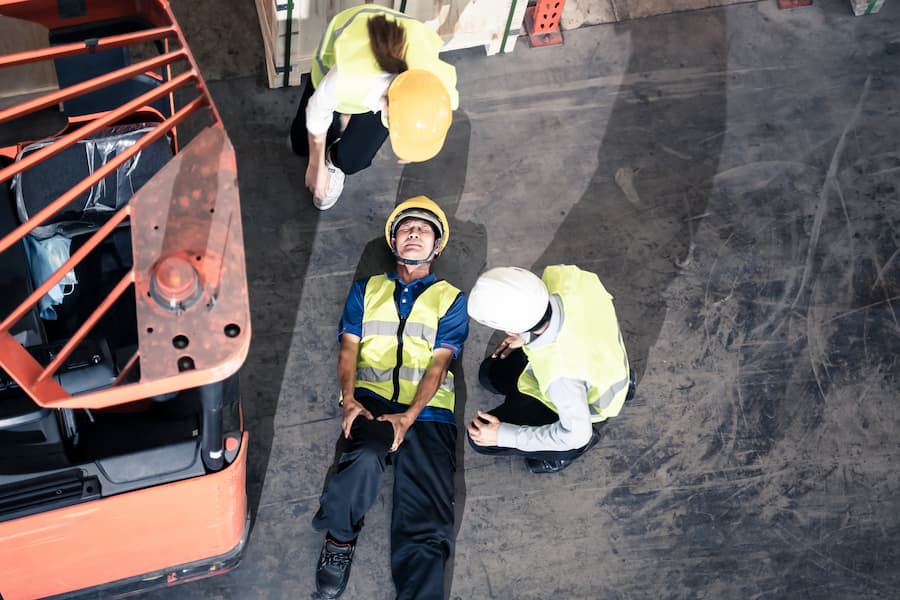

 Lifting injuries refer to damage you sustain from picking up heavy objects or repeatedly lifting items. Lifting injuries most commonly affect the back, usually the lower back, but they can also affect your shoulders, neck, knees, legs, hips, and arms. In almost every case, lifting injuries result from the straining or overexertion of muscles, tendons, ligaments, spinal discs, and other surrounding soft tissue. They can result in chronic, permanent, painful disabilities.


 ES
ES