Although construction work is one of the most important professions in our society, it is also one of the most dangerous. Construction workers routinely work at heights and around heavy equipment, machinery, and vehicles. They must also carry heavy loads of materials and work around exposed wiring, chemicals, and other potential hazards.
The Occupational Safety and Health Administration (OSHA) and the California division of OSHA (Cal/OSHA) mandate and enforce numerous regulations regarding workplace safety to prevent job-related injuries and fatalities. However, construction accidents still happen, resulting in tens of thousands of injuries and deaths each year.
If you suffered injuries or lost a loved one from a construction accident, you need to consult an experienced California construction accident attorney immediately. Whether you were an employee of a construction company or a visitor to the site, an attorney can review your case and advise you on your options for getting the benefits and compensation you need to cover the costs of your medical treatment, lost wages, and other damages.
No matter the construction project, all workers on site can sustain injuries from any number of causes, but some construction accidents are more common than others. In fact, these construction accidents are so common, the industry dubbed them the Fatal Four:
Falls
Falls are the most common type of construction accident, accounting for around 35 percent of all construction accidents.
The two most common types of fall accidents include:
Falls from heights occur when a worker falls from a ladder or scaffold, or off a roof or raised platform. The severity of the injuries the worker suffers depends largely on the height from which they fall, how they landed, and whether they struck other objects on the way down. In many cases, proper safety equipment, such as harnesses and netting, can prevent falls from heights.
Slip or trip falls occur when a worker slips on wet flooring or trips over debris or other objects lying in their path. Some common hazards around construction sites include unsecured electrical cords and tools lying on the ground, as well as boards and lumber, rebar, and discarded building materials. Slip and trip falls can also cause a worker to fall from heights if they lose their footing while working off the ground.
Any fall can cause debilitating and life-threatening injuries, but falls from heights usually cause the most severe and fatal injuries.
Electrocution
Many construction workers suffer electrocution injuries on construction sites. Electric shock can come from exposed wiring in the building itself, overhead power lines, or electric tools. Electrical burns are the most common electrocution injuries, but electric shock can also cause cardiac arrest, nerve damage, and other severe injuries. OSHA has requirements regarding properly covering electrical devices and using proper protective equipment when working around live wiring.
Struck by Objects
Construction sites are hives of activity, with materials, equipment, workers, and vehicles constantly moving. In a struck-by-object accident, an impact occurs between a worker and an object or piece of equipment. Sources can include falling materials, a machine, or a large object moved by workers.
Construction workers and foremen should secure materials properly for storage or before moving or transporting them. They should also not stack materials so high they could topple over. Struck-by-object accidents can cause serious injuries, including crushing injuries, bone fractures, head injuries, and internal organ damage.
Caught in or Between Objects
A construction worker can get caught in or between objects. Examples include a vehicle pushing a worker against a wall or structure, or a machine grabbing and pulling in a worker’s body part, such as an arm or leg. These accidents regularly result in debilitating injuries, such as amputations and disfigurement, and can lead to severe permanent disabilities.
Other Leading Causes of Construction Accidents
Vehicles. Outside of the Fatal Four, the other leading cause of construction accidents is vehicles. The U.S. Bureau of Labor Statistics finds that around 25 percent of all fatal construction accidents across the country involve vehicles. Construction workers regularly work around large commercial trucks, heavy earth-moving and transporting equipment, and even light-duty pickups and other smaller vehicles.
The activity and noise of construction sites make it difficult for workers to hear or see vehicles, and vehicle operators may not notice workers in their path, especially when going in reverse. Even though vehicles may not move quickly on a construction site, their sheer size and weight can cause severe, life-threatening injuries to victims.
Faulty equipment. Construction workers can sustain injuries if the equipment or tools they use malfunction or fail. This includes not only tools but safety equipment as well. If a design or manufacturing defect caused the equipment’s failure, an injured worker may pursue a third-party claim against the manufacturer.
Repetitive motion and jarring injuries. Some construction tools, such as jackhammers, create enormous jarring that can lead to injuries. Also, workers can suffer repetitive motion injuries through activities like sawing and nailing. Constantly bending, twisting, and picking up materials can also lead to back injuries as well as leg, hip, arm, and shoulder injuries.
Ground and trench collapse. Construction workers usually have to excavate construction sites to build foundations and dig deep holes for pillars and posts. Unstable ground can give way unexpectedly, trapping or burying workers. Ground and trench collapse account for many fatalities each year and severely injure many construction workers.
Other potential hazards exist on any construction site, and any construction accident can seriously injure victims. Construction workers who suffer injuries on the job should consult an experienced construction accident attorney to see if their case qualifies for workers’ compensation, and whether they have other options for compensation, such as through a third-party liability claim.
Common Construction Accident Injuries
Since so many hazards exist on construction sites, workers run the risk of a wide range of injuries.
The type and severity of the injury will depend on the nature of the accident, but some common construction accident injuries include:
Broken bones and crushing injuries
Head injuries
Traumatic brain injuries
Back and spinal cord injuries
Hip and joint injuries
Soft tissue damage
Burns
Eye injuries
Severe cuts
Amputation injuries
A serious injury can damage your life in many ways. Not only must you deal with the pain and inconvenience of the injury itself, but you likely had to take time off work to recover. Depending on your injury, you may never work at all again or only in a limited capacity.
What to Do if You Suffer Injuries in a Construction Accident
If you sustain injuries in a construction accident, you must:
Assess your injuries. If you sustained severe or life-threatening injuries, someone should call 911 immediately and report the accident. If you suffer back or head injuries, you shouldn’t try to move. Wait on emergency personnel to stabilize you for transport to the hospital. Even if your injuries are not severe, you still need to get a medical evaluation as soon as possible.
Document the accident and your injuries. If you can move, document as much of the accident as possible, including by taking pictures of your injuries and the accident scene. You should also jot down details about the accident and what caused it while the memories remain fresh in your mind.
Inform your manager or supervisor. Tell your employer about your injuries. You don’t need to go into detail about how the accident happened, just provide the basics.
Call an attorney. You may have several options for obtaining compensation for your injuries. An experienced attorney can review your case, advise you of your options, and represent you throughout the process. A lawyer can also assert your rights and protect you from predatory insurance company behavior and get you the best results possible.
Contact an Experienced California Construction Accident Attorney
The California construction accident attorneys at Bentley & More have many years of experience helping injured construction workers throughout Orange County and the surrounding areas with their complex construction accident claims. Well-versed in workers’ compensation as well as third-party claims, we can determine your best options for getting the compensation and benefits you need. We are prepared to fight hard for your rights and future and help you get the maximum compensation possible.
Contact us today at (949) 870-3800 for your free consultation with one of our Newport Beach construction accident attorneys.
About the author: Keith More
Co-Founder & Trial Lawyer at Bentley & More LLP
Keith P. More is Co-Founder of Bentley & More LLP in Newport Beach, California. With 37 years of experience, he represents injured workers in California workers’ compensation cases, including catastrophic injury claims. A four-time Orange County Trial Lawyers Association Workers’ Compensation Trial Lawyer of the Year, he obtained a $14.7 million settlement for a tetraplegic client, which the firm describes as the largest in California workers’ compensation history. Keith earned his J.D. with honors from DePaul University College of Law.
The cf_use_ob cookie informs Cloudflare to fetch the requested resource from the Always Online cache on the designated port. Applicable values are: 0, 80, and 443. The cf_ob_info and cf_use_ob cookies are persistent cookies that expire after 30 seconds.
session
__cfwaitingroom
The __cfwaitingroom cookie is only used to track visitors that access a waiting room enabled host and path combination for a zone. Visitors using a browser that does not accept cookies cannot visit the host and path combination while the waiting room is active.
session
cf_chl_rc_i
These cookies are for internal use which allows Cloudflare to identify production issues on clients.
session
cf_chl_rc_ni
These cookies are for internal use which allows Cloudflare to identify production issues on clients.
session
cf_chl_rc_m
These cookies are for internal use which allows Cloudflare to identify production issues on clients.
session
__cfruid
Used by the content network, Cloudflare, to identify trusted web traffic.
session
__cf_bm
Cloudflare's bot products identify and mitigate automated traffic to protect your site from bad bots. Cloudflare places the __cf_bm cookie on End User devices that access Customer sites that are protected by Bot Management or Bot Fight Mode. The __cf_bm cookie is necessary for the proper functioning of these bot solutions.
session
__cflb
When enabling session affinity with Cloudflare Load Balancer, Cloudflare sets a __cflb cookie with a unique value on the first response to the requesting client. Cloudflare routes future requests to the same origin, optimizing network resource usage. In the event of a failover, Cloudflare sets a new __cflb cookie to direct future requests to the failover pool.
session
_cfuvid
The _cfuvid cookie is only set when a site uses this option in a Rate Limiting Rule, and is only used to allow the Cloudflare WAF to distinguish individual users who share the same IP address.
session
cf_clearance
Whether a CAPTCHA or Javascript challenge has been solved.
session
__cfseq
Sequence rules uses cookies to track the order of requests a user has made and the time between requests and makes them available via Cloudflare Rules. This allows you to write rules that match valid or invalid sequences. The specific cookies used to validate sequences are called sequence cookies.
session
cf_ob_info
The cf_ob_info cookie provides information on: The HTTP Status Code returned by the origin web server. The Ray ID of the original failed request. The data center serving the traffic
session
These cookies are needed for adding comments on this website.
Name
Description
Duration
comment_author_email
Used to track the user across multiple sessions.
Session
comment_author_url
Used to track the user across multiple sessions.
Session
comment_author
Used to track the user across multiple sessions.
Session
Name
Description
Duration
cookietest
Session
Google reCAPTCHA helps protect websites from spam and abuse by verifying user interactions through challenges.
Name
Description
Duration
_GRECAPTCHA
Google reCAPTCHA sets a necessary cookie (_GRECAPTCHA) when executed for the purpose of providing its risk analysis.
179 days
Google Tag Manager simplifies the management of marketing tags on your website without code changes.
Name
Description
Duration
cookiePreferences
Registers cookie preferences of a user
2 years
td
Registers statistical data on users' behaviour on the website. Used for internal analytics by the website operator.
session
Statistics cookies collect information anonymously. This information helps us understand how visitors use our website.
Name
Description
Duration
calltrk_session_id
-
calltrk_referrer
6 months
calltrk_nearest_tld
10 years
calltrk_landing
6 months
calltrk_fcid
-
Google Analytics is a powerful tool that tracks and analyzes website traffic for informed marketing decisions.
Used to monitor number of Google Analytics server requests
10 minutes
__utmb
Used to distinguish new sessions and visits. This cookie is set when the GA.js javascript library is loaded and there is no existing __utmb cookie. The cookie is updated every time data is sent to the Google Analytics server.
30 minutes after last activity
__utmc
Used only with old Urchin versions of Google Analytics and not with GA.js. Was used to distinguish between new sessions and visits at the end of a session.
End of session (browser)
__utmz
Contains information about the traffic source or campaign that directed user to the website. The cookie is set when the GA.js javascript is loaded and updated when data is sent to the Google Anaytics server
6 months after last activity
__utmv
Contains custom information set by the web developer via the _setCustomVar method in Google Analytics. This cookie is updated every time new data is sent to the Google Analytics server.
2 years after last activity
__utmx
Used to determine whether a user is included in an A / B or Multivariate test.
18 months
_ga
ID used to identify users
2 years
_gali
Used by Google Analytics to determine which links on a page are being clicked
30 seconds
_ga_
ID used to identify users
2 years
_gid
ID used to identify users for 24 hours after last activity
24 hours
_gat
Used to monitor number of Google Analytics server requests when using Google Tag Manager
1 minute
_gac_
Contains information related to marketing campaigns of the user. These are shared with Google AdWords / Google Ads when the Google Ads and Google Analytics accounts are linked together.
90 days
__utma
ID used to identify users and sessions
2 years after last activity
Name
Description
Duration
fd_uuid
5 days
fd_phoneNumber
5 minutes
fd_pageViews
5 days
fd_pageHistory
5 days
fd_geoState
5 days
fd_geoCountry
5 days
fd_geoCity
5 days
fd_fvURL
5 days
fd_fvReferrer
5 days
fd_fvDate
5 days
fd_chatStatus
5 days
fd_chatOpened
10 days
fd_chatClosed
10 days
fd_agentName
5 hours
Marketing cookies are used to follow visitors to websites. The intention is to show ads that are relevant and engaging to the individual user.
Facebook Pixel is a web analytics service that tracks and reports website traffic.
Targeting cookie. Used to create a user profile and display relevant and personalised Google Ads to the user.
2 years
__Secure-1PSIDCC
Targeting cookie. Used to create a user profile and display relevant and personalised Google Ads to the user.
2 years
_gcl_au
-
__Secure-3PAPISID
Profiles the interests of website visitors to serve relevant and personalised ads through retargeting.
2 years
_gcl_aw
Google uses cookies for advertising, including serving and rendering ads, personalizing ads (depending on your ad settings at g.co/adsettings), limiting the number of times an ad is shown to a user, muting ads you have chosen to stop seeing, and measuring the effectiveness of ads.
90 Days
AEC
AEC cookies ensure that requests within a browsing session are made by the user, and not by other sites. These cookies prevent malicious sites from acting on behalf of a user without that user's knowledge.
6 months
_gcl_gs
Google uses cookies for advertising, including serving and rendering ads, personalizing ads (depending on your ad settings at g.co/adsettings), limiting the number of times an ad is shown to a user, muting ads you have chosen to stop seeing, and measuring the effectiveness of ads.
90 Days
_gcl_gb
Google uses cookies for advertising, including serving and rendering ads, personalizing ads (depending on your ad settings at g.co/adsettings), limiting the number of times an ad is shown to a user, muting ads you have chosen to stop seeing, and measuring the effectiveness of ads.
90 Days
_gac_gb_
Google uses cookies for advertising, including serving and rendering ads, personalizing ads (depending on your ad settings at g.co/adsettings), limiting the number of times an ad is shown to a user, muting ads you have chosen to stop seeing, and measuring the effectiveness of ads.
90 Days
FPGCLGB
Google uses cookies for advertising, including serving and rendering ads, personalizing ads (depending on your ad settings at g.co/adsettings), limiting the number of times an ad is shown to a user, muting ads you have chosen to stop seeing, and measuring the effectiveness of ads.
90 Days
FPGCLAW
Google uses cookies for advertising, including serving and rendering ads, personalizing ads (depending on your ad settings at g.co/adsettings), limiting the number of times an ad is shown to a user, muting ads you have chosen to stop seeing, and measuring the effectiveness of ads.
90 Days
ADS_VISITOR_ID
Cookie required to use the options and on-site web services
2 months
__Secure-3PSIDCC
Targeting cookie. Used to create a user profile and display relevant and personalised Google Ads to the user.
2 years
__Secure-3PSIDTS
Targeting cookie. Used to create a user profile and display relevant and personalised Google Ads to the user.
2 years
__Secure-1PSIDTS
Targeting cookie. Used to create a user profile and display relevant and personalised Google Ads to the user.
2 years
__Secure-1PAPISID
Targeting cookie. Used to create a user profile and display relevant and personalised Google Ads to the user.
2 years
__Secure-3PSID
Targeting cookie. Used to profile the interests of website visitors and display relevant and personalised Google ads.
2 years
Conversion
Google uses cookies for advertising, including serving and rendering ads, personalizing ads (depending on your ad settings at g.co/adsettings), limiting the number of times an ad is shown to a user, muting ads you have chosen to stop seeing, and measuring the effectiveness of ads.
90 days
You can find more information in our Privacy Policy and .




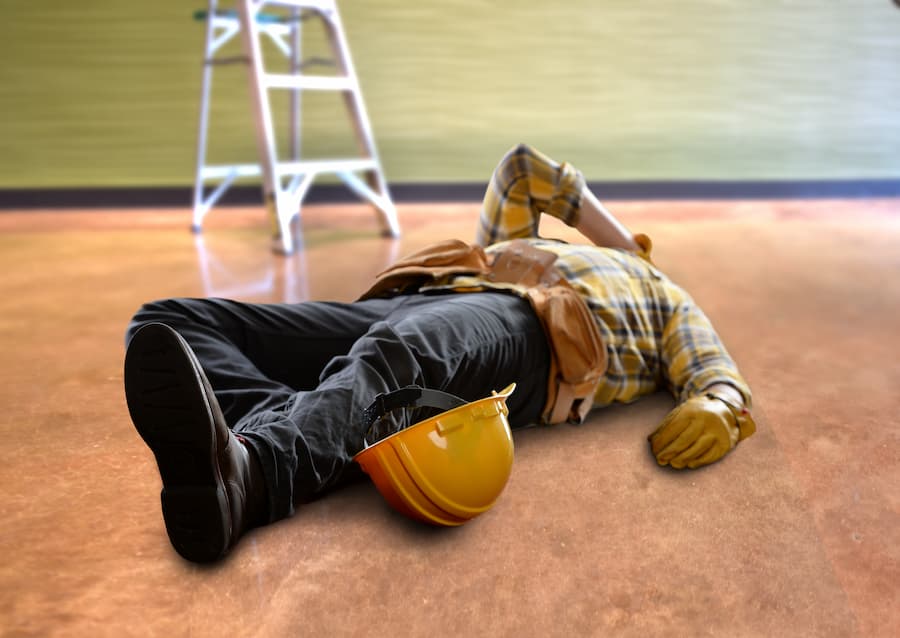

 No matter the construction project, all workers on site can sustain injuries from any number of causes, but some construction accidents are more common than others. In fact, these construction accidents are so common, the industry dubbed them the Fatal Four:


 ES
ES