With more vehicles on the road comes the unfortunate—and increased—possibility of severe traffic accidents. Many roads in the Irvine area see extremely high vehicle traffic daily, including on California State Route 55 and State Route 1, otherwise known as Coastal Highway. Additionally, the downtown sees heavy traffic, especially during morning and evening commute hours.
Car accidents in Irvine and surrounding areas leave many drivers and passengers with severe injuries. These injuries may prevent accident victims from working, and they may see their medical expenses pile up very quickly. Moreover, accident victims—especially those who suffer permanent injuries—may experience ongoing inconvenience, suffering, and pain for a significant amount of time.
If you or a person you love suffered injuries in a car accident, you should take legal action as quickly as possible in your case. An experienced Irvine car accident attorney can meet with you to discuss your car accident circumstances and help you file a claim with the at-fault driver’s insurance company. Your legal team will then engage the insurance company in meaningful settlement negotiations or, if necessary, file a lawsuit and pursue litigation in your case. Reach out to a Irvine car accident lawyer.
Before you meet with your attorney, however, it helps to understand car accidents and California law. Having a basic understanding of your case will help you as you navigate through the legal process.
Car accidents typically happen when people drive carelessly, negligently, and recklessly. A driver is negligent when they drive unreasonably, given the circumstances at that time.
First, many Irvine car accidents result from speeding and other traffic law violations. When drivers exceed the speed limit, they are less likely to maintain control over their vehicle, negligently causing it to swerve out of control and strike another vehicle or pedestrian. Moreover, when drivers tailgate—or follow other vehicles too closely—they may be unable to stop their car in time to avoid a crash.
Moreover, some car accidents happen when people drive under the influence of alcohol or drugs. When individuals drink and drive, they may experience a lack of concentration, nausea, dizziness, and delayed reaction time. Consequently, they may be unable to stop their vehicle in time to avoid striking another vehicle or pedestrian—even if they see the car or pedestrian in advance.
When passenger vehicle drivers exceed a blood alcohol concentration (BAC) of 0.08 percent, the law presumes them intoxicated. Commercial truck drivers and minors who are under 21 years old must follow more stringent legal standards. In addition to incurring criminal penalties for a DUI conviction, a guilty driver or their insurance company may also have to pay civil damages if they cause a traffic accident that injures someone else.
In addition to drunk driving, many Irvine car wrecks result from distracted vehicle operations. Another term for distracted driving is inattentive driving. Drivers might ignore the road when they fiddle with an electronic device in their vehicle, listen to loud music, or talk on a cellular device that lacks Bluetooth capabilities. Focusing on something else while driving may prevent a driver from seeing a nearby pedestrian or other vehicles, bringing about a severe accident.
Next, some car accidents result from fatigued driving. When commercial truck drivers and others get behind the wheel without sufficient sleep, they may experience symptoms similar to intoxicated drivers. For example, they may experience impaired vision, delayed concentration, limited reflexes, and delayed reaction time. These deficiencies significantly increase a fatigued driver’s chances of causing a severe motor vehicle accident.
If you sustained injuries in a car crash that resulted from some other driver’s negligence, the time to take legal action in your case is now. Your legal team can help you take appropriate legal action against the responsible driver and pursue the monetary damages you need in your personal injury case.
What Are Some Common Types of Car Accidents?
When people drive recklessly and carelessly, they may cause accidents that lead to severe injuries. The accident will usually depend on the crash location and the vehicles’ directions.
Some of the most common types of car accidents that lead to severe injuries include:
T-bone or broadside collisions at traffic intersections
Can I File a Claim With the Responsible Driver’s Insurance Company?
California is a fault-based state when it comes to motor vehicle crashes. Therefore, if a negligent driver caused your car accident, you may file a personal injury claim with that driver’s insurance company. You must forward documentation about the accident and your injuries to an insurance company representative to file a claim.
Essential documents in your car crash case may include copies of your:
Lost income documents from your employer
Medical treatment records
Medical bills
Photographs of your injuries
Pictures of the car accident scene
Statements from eyewitnesses to the occurrence
When you hire a car accident lawyer, they will begin gathering those documents on your behalf, even while you complete your medical treatment.
After your medical treatment, your attorney can submit the claim documents to the insurance company and send a settlement demand letter for the compensation you deserve. They can then begin negotiating with the insurance company representative handling your claim.
What if the Other Driver Did Not Have Insurance Coverage?
Even though California requires motor vehicle owners and operators to carry insurance coverage, many do not.
If the at-fault driver who hit you did not have motor vehicle insurance coverage or fled the accident scene, you can file an uninsured motorist claim with your own insurance company.
If the responsible driver does not have enough insurance coverage to compensate you for all your losses, you can file an underinsured motorist claim with your insurance company.
An experienced auto accident attorney can help you determine all potentially applicable insurance coverage in your case and file the necessary claims with the appropriate insurers.
What Do I Need to Prove to Recover Money Damages in a Car Accident Case?
To recover monetary compensation as part of a California car accident claim or lawsuit, you must satisfy your legal burden of proof.
As the victim in a car accident case, you must establish:
Duty
Breach of duty
Causation
Damages
First, you must demonstrate that the responsible driver owed you a legal duty of care. This element is relatively easy to establish in car accident cases because all drivers must follow California traffic laws and drive with a reasonable amount of care.
Next, you must show that the responsible driver violated their duty of care to you and that your accident occurred as a result. Finally, you must demonstrate that you suffered at least one physical injury as a direct result of your car accident.
In some car accident scenarios, mainly where the fault is obvious (such as with DUI), the at-fault driver’s insurer might admit fault for the accident. In that situation, you will only need to prove your car accident claim’s causation and damage elements.
An experienced lawyer can help you establish the legal elements of your claim or lawsuit by retaining experts, such as accident reconstructionists or medical experts, who can testify in your case.
The best car accident attorney for your case will already have strong working relationships with local medical providers who can causally relate your injuries to your car crash. A medical provider can also establish that you suffered a permanent, lifetime injury in your accident.
What Money Damages May I Recover for my Car Accident Injuries?
Car accidents can lead to severe injuries, including traumatic brain injuries, soft tissue contusions, bone fractures, spinal cord damage, and paralysis. Car crash victims in Irvine who can prove the legal elements of their claim can recover various monetary damages.
Every car crash scenario is different, and accident victims may suffer very different injuries in their crashes. Therefore, the types and amounts of financial compensation that victims recover will vary from case to case, depending upon the circumstances.
Factors that influence these damages include:
The accident location
The type of accident that occurs
The injuries the accident victim suffers
The cost of the accident victim’s medical treatment
Whether the accident victim suffered permanent losses in their accident
Whether the accident victim missed time from work
The extent of the accident victim’s pain and suffering
Whether the accident victim suffered from pre-existing injuries or medical conditions at the time of their accident
Insurance companies do everything they can to try and undermine an accident victim’s claim or lawsuit. Therefore, you should have skilled lawyer on your side negotiating and advocating for you every step of the way.
Via settlement or litigation, car accident victims can recover monetary compensation for their:
Past and future medical expenses
Emotional anguish and mental distress
Permanent disability or disfigurement
Loss of earning capacity
Lost income
Loss of the ability to use a body part
Loss of life enjoyment
Permanent disfigurement or disability
Lifetime care costs
Loss of spousal companionship
Your legal team will work hard to assist you during settlement negotiations and any necessary litigation to maximize your monetary recovery. We can also help you develop realistic expectations for your case and let you know its approximate value.
Contact An Experienced Car Accident Lawyer in Irvine Today
If you sustained injuries in a recent Irvine car crash that resulted from someone else’s carelessness, you should take legal action as quickly as possible. California car accident victims have limited time to file a claim for monetary damages.
The time clock begins to run on the accident date and ends two years later—sooner in some cases. If a car crash victim fails to file their lawsuit in two years, absent extremely limited circumstances, they may no longer recover monetary damages for their injuries.
Look for an experienced legal team with the resources and skills necessary to effectively negotiate favorable settlement compensation on your behalf.
If the insurance company refuses to offer you the monetary damages you deserve, you need a car accident lawyer who welcomes the opportunity to file a lawsuit and take your case to a jury trial.
Not only that, look for a strong record of success in litigating cases through the California Court System and obtaining favorable jury verdicts and binding arbitration awards. Then let that attorney help you pursue and recover the compensation you need today.
Greg Bentley is Co-Founder of Bentley & More LLP in Newport Beach, California. With 36 years of experience, he represents plaintiffs in personal injury, wrongful death, product liability, insurance bad faith, dangerous road and property conditions, and construction-site failure cases. Admitted to the State Bar of California, Greg earned his J.D. from Western State University College of Law in 1990. He is a member of several invitation-only trial organizations, including the American College of Trial Lawyers and the International Academy of Trial Lawyers, and is active in multiple statewide and regional trial lawyer associations.
Used by the content network, Cloudflare, to identify trusted web traffic.
session
__cf_bm
Cloudflare's bot products identify and mitigate automated traffic to protect your site from bad bots. Cloudflare places the __cf_bm cookie on End User devices that access Customer sites that are protected by Bot Management or Bot Fight Mode. The __cf_bm cookie is necessary for the proper functioning of these bot solutions.
session
__cflb
When enabling session affinity with Cloudflare Load Balancer, Cloudflare sets a __cflb cookie with a unique value on the first response to the requesting client. Cloudflare routes future requests to the same origin, optimizing network resource usage. In the event of a failover, Cloudflare sets a new __cflb cookie to direct future requests to the failover pool.
session
_cfuvid
The _cfuvid cookie is only set when a site uses this option in a Rate Limiting Rule, and is only used to allow the Cloudflare WAF to distinguish individual users who share the same IP address.
session
cf_clearance
Whether a CAPTCHA or Javascript challenge has been solved.
session
__cfseq
Sequence rules uses cookies to track the order of requests a user has made and the time between requests and makes them available via Cloudflare Rules. This allows you to write rules that match valid or invalid sequences. The specific cookies used to validate sequences are called sequence cookies.
session
cf_ob_info
The cf_ob_info cookie provides information on: The HTTP Status Code returned by the origin web server. The Ray ID of the original failed request. The data center serving the traffic
session
cf_use_ob
The cf_use_ob cookie informs Cloudflare to fetch the requested resource from the Always Online cache on the designated port. Applicable values are: 0, 80, and 443. The cf_ob_info and cf_use_ob cookies are persistent cookies that expire after 30 seconds.
session
__cfwaitingroom
The __cfwaitingroom cookie is only used to track visitors that access a waiting room enabled host and path combination for a zone. Visitors using a browser that does not accept cookies cannot visit the host and path combination while the waiting room is active.
session
cf_chl_rc_i
These cookies are for internal use which allows Cloudflare to identify production issues on clients.
session
cf_chl_rc_ni
These cookies are for internal use which allows Cloudflare to identify production issues on clients.
session
cf_chl_rc_m
These cookies are for internal use which allows Cloudflare to identify production issues on clients.
session
These cookies are needed for adding comments on this website.
Name
Description
Duration
comment_author_email
Used to track the user across multiple sessions.
Session
comment_author_url
Used to track the user across multiple sessions.
Session
comment_author
Used to track the user across multiple sessions.
Session
Name
Description
Duration
cookietest
Session
Google reCAPTCHA helps protect websites from spam and abuse by verifying user interactions through challenges.
Name
Description
Duration
_GRECAPTCHA
Google reCAPTCHA sets a necessary cookie (_GRECAPTCHA) when executed for the purpose of providing its risk analysis.
179 days
Google Tag Manager simplifies the management of marketing tags on your website without code changes.
Name
Description
Duration
cookiePreferences
Registers cookie preferences of a user
2 years
td
Registers statistical data on users' behaviour on the website. Used for internal analytics by the website operator.
session
Statistics cookies collect information anonymously. This information helps us understand how visitors use our website.
Name
Description
Duration
calltrk_session_id
-
calltrk_referrer
6 months
calltrk_nearest_tld
10 years
calltrk_landing
6 months
calltrk_fcid
-
Google Analytics is a powerful tool that tracks and analyzes website traffic for informed marketing decisions.
Used by Google Analytics to determine which links on a page are being clicked
30 seconds
_ga_
ID used to identify users
2 years
_gid
ID used to identify users for 24 hours after last activity
24 hours
_gat
Used to monitor number of Google Analytics server requests when using Google Tag Manager
1 minute
_gac_
Contains information related to marketing campaigns of the user. These are shared with Google AdWords / Google Ads when the Google Ads and Google Analytics accounts are linked together.
90 days
__utma
ID used to identify users and sessions
2 years after last activity
__utmt
Used to monitor number of Google Analytics server requests
10 minutes
__utmb
Used to distinguish new sessions and visits. This cookie is set when the GA.js javascript library is loaded and there is no existing __utmb cookie. The cookie is updated every time data is sent to the Google Analytics server.
30 minutes after last activity
__utmc
Used only with old Urchin versions of Google Analytics and not with GA.js. Was used to distinguish between new sessions and visits at the end of a session.
End of session (browser)
__utmz
Contains information about the traffic source or campaign that directed user to the website. The cookie is set when the GA.js javascript is loaded and updated when data is sent to the Google Anaytics server
6 months after last activity
__utmv
Contains custom information set by the web developer via the _setCustomVar method in Google Analytics. This cookie is updated every time new data is sent to the Google Analytics server.
2 years after last activity
__utmx
Used to determine whether a user is included in an A / B or Multivariate test.
18 months
_ga
ID used to identify users
2 years
Name
Description
Duration
fd_fvURL
5 days
fd_fvReferrer
5 days
fd_fvDate
5 days
fd_chatStatus
5 days
fd_chatOpened
10 days
fd_chatClosed
10 days
fd_agentName
5 hours
fd_uuid
5 days
fd_phoneNumber
5 minutes
fd_pageViews
5 days
fd_pageHistory
5 days
fd_geoState
5 days
fd_geoCountry
5 days
fd_geoCity
5 days
Marketing cookies are used to follow visitors to websites. The intention is to show ads that are relevant and engaging to the individual user.
Facebook Pixel is a web analytics service that tracks and reports website traffic.
Google uses cookies for advertising, including serving and rendering ads, personalizing ads (depending on your ad settings at g.co/adsettings), limiting the number of times an ad is shown to a user, muting ads you have chosen to stop seeing, and measuring the effectiveness of ads.
90 Days
FPGCLAW
Google uses cookies for advertising, including serving and rendering ads, personalizing ads (depending on your ad settings at g.co/adsettings), limiting the number of times an ad is shown to a user, muting ads you have chosen to stop seeing, and measuring the effectiveness of ads.
90 Days
ADS_VISITOR_ID
Cookie required to use the options and on-site web services
2 months
__Secure-3PSIDCC
Targeting cookie. Used to create a user profile and display relevant and personalised Google Ads to the user.
2 years
__Secure-3PSIDTS
Targeting cookie. Used to create a user profile and display relevant and personalised Google Ads to the user.
2 years
__Secure-1PSIDTS
Targeting cookie. Used to create a user profile and display relevant and personalised Google Ads to the user.
2 years
__Secure-1PAPISID
Targeting cookie. Used to create a user profile and display relevant and personalised Google Ads to the user.
2 years
__Secure-3PSID
Targeting cookie. Used to profile the interests of website visitors and display relevant and personalised Google ads.
2 years
Conversion
Google uses cookies for advertising, including serving and rendering ads, personalizing ads (depending on your ad settings at g.co/adsettings), limiting the number of times an ad is shown to a user, muting ads you have chosen to stop seeing, and measuring the effectiveness of ads.
90 days
__Secure-1PSID
Targeting cookie. Used to create a user profile and display relevant and personalised Google Ads to the user.
2 years
__Secure-1PSIDCC
Targeting cookie. Used to create a user profile and display relevant and personalised Google Ads to the user.
2 years
_gcl_au
-
__Secure-3PAPISID
Profiles the interests of website visitors to serve relevant and personalised ads through retargeting.
2 years
_gcl_aw
Google uses cookies for advertising, including serving and rendering ads, personalizing ads (depending on your ad settings at g.co/adsettings), limiting the number of times an ad is shown to a user, muting ads you have chosen to stop seeing, and measuring the effectiveness of ads.
90 Days
AEC
AEC cookies ensure that requests within a browsing session are made by the user, and not by other sites. These cookies prevent malicious sites from acting on behalf of a user without that user's knowledge.
6 months
_gcl_gs
Google uses cookies for advertising, including serving and rendering ads, personalizing ads (depending on your ad settings at g.co/adsettings), limiting the number of times an ad is shown to a user, muting ads you have chosen to stop seeing, and measuring the effectiveness of ads.
90 Days
_gcl_gb
Google uses cookies for advertising, including serving and rendering ads, personalizing ads (depending on your ad settings at g.co/adsettings), limiting the number of times an ad is shown to a user, muting ads you have chosen to stop seeing, and measuring the effectiveness of ads.
90 Days
_gac_gb_
Google uses cookies for advertising, including serving and rendering ads, personalizing ads (depending on your ad settings at g.co/adsettings), limiting the number of times an ad is shown to a user, muting ads you have chosen to stop seeing, and measuring the effectiveness of ads.
90 Days
You can find more information in our Privacy Policy and .






 California is a fault-based state when it comes to motor vehicle crashes. Therefore, if a negligent driver caused your car accident, you may file a personal injury claim with that driver’s insurance company. You must forward documentation about the accident and your injuries to an insurance company representative to file a claim.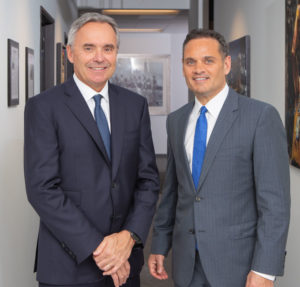


 ES
ES